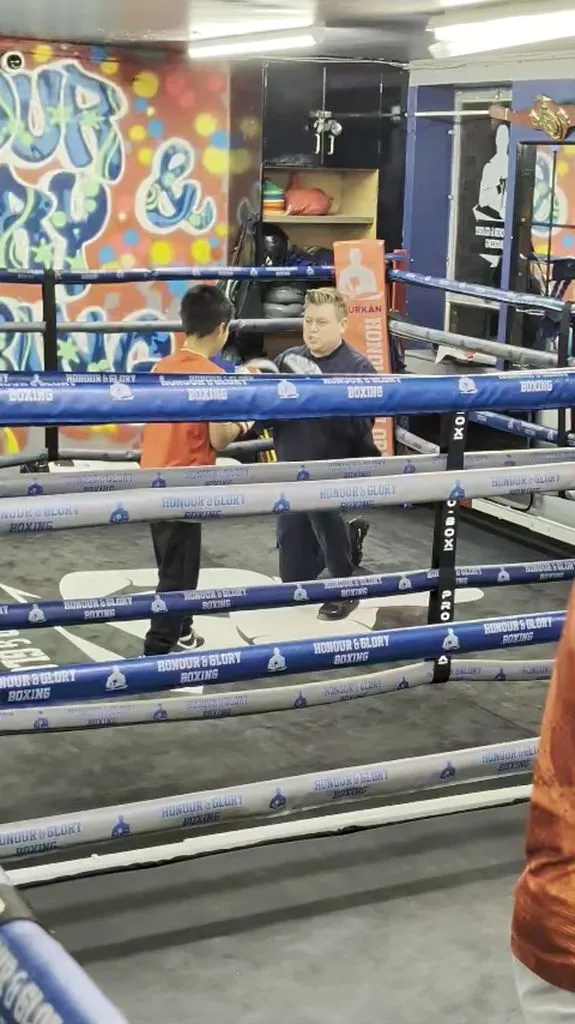
England Boxing's club safeguarding policies and procedures are worth reading because they show the minimum standards an affiliated club should understand. The NSPCC's advice on keeping children safe in sports clubs is useful for parents because it frames the issue in plain language.
Parents do not need to become boxing experts before choosing a club for their child.
They do need to ask better questions than "Do they seem nice?" and "Does my child look busy?"
A junior boxing club can look lively, popular and professional while still being weak on the things that matter most. The easiest way to cut through the sales pitch is to ask direct questions and pay attention not only to the answers, but to how easily those answers come.
Here are the questions that actually tell you something.
1. Are All Coaches Who Work With Children DBS Checked?
This should be the easiest question in the world for a serious junior club.
The answer should be immediate and clear. Not hesitant, not vague, not wrapped in a story about how long the coach has been around.
You are not being difficult by asking. You are asking the most basic due-diligence question any parent should ask.
If the answer feels defensive, awkward or strangely informal, keep looking.
2. What Safeguarding Policy Do You Follow?
This is where you find out whether the club treats safeguarding as real or decorative.
Good answers mention the actual framework they follow, who the welfare contact is, and what happens if a parent or child has a concern. Weak answers drift into generalities.
You are looking for a club that sounds like it has thought this through before today.
3. Can Parents Watch Sessions?
Different clubs handle this differently, and there is some nuance. Parents do not need to coach from the side or hover over every drill. That is not helpful.
But for junior boxing, the overall environment should feel open rather than secretive. Parents should not feel as though they are being shut out of a black box.
- yes, especially while a child is settling in
- yes, from the side or viewing area
- yes, but we ask parents not to interrupt the session
That feels sane. A strange resistance to parents seeing anything should make you curious.
4. Is Sparring Optional?
This is one of the biggest questions for families.
Many children benefit hugely from boxing and never want to compete. That is normal. A well-run club understands the difference between boxing as a discipline and boxing as a competition pathway.
- Is sparring optional?
- When does it begin?
- How do you decide who is ready?
- How do you match children?
The answer you want is not bravado. It is caution.
A good coach talks about readiness, control, supervision and progression. A poor one talks like putting children in together is simply what boxing people do.

5. How Are Children Grouped by Age and Ability?
Junior boxing works best when coaching is matched to the child in front of the coach.
Even if a club uses a broad age range on paper, there should be a clear explanation of how younger, older, nervous, advanced and complete-beginner children are handled inside the session.
If the answer is effectively "they all just get on with it", that is not a youth-coaching philosophy. That is an organisational gap.
6. What Does a Typical Session Actually Involve?
This question is underrated because it gets past generic promises.
- warm-up
- movement or footwork
- technical work
- bag or pad work
- supervised drills
- finish
If the answer is fluffy or oddly non-specific, you may be dealing with a club that sells the idea of boxing more confidently than it coaches boxing.
7. How Do You Handle a Nervous Child?
This is a brilliant question because it reveals whether the coach understands children or only understands boxing.
- keeping the first session simple
- introducing them gradually
- pairing them sensibly
- giving them a small early win
- avoiding unnecessary pressure
If the answer sounds like "they just need to toughen up", that tells you plenty.
8. What Are the Costs, and Is There a Contract?
A serious parent should know exactly what the financial arrangement is before a child becomes emotionally invested.
- What is the session price?
- Is there a joining fee?
- Do I have to commit to a membership?
- Is there a trial?
- Is there any notice period?
You are not looking for the cheapest club. You are looking for a club that is straight with you.
The right answer is clarity.
9. Who Do I Speak to If Something Feels Off?
This is one of the strongest questions in the whole list.
Every club working with children should have a sensible route for concerns. Not just safeguarding in the formal sense, but everyday concerns too. Maybe your child is anxious. Maybe the tone of a session felt wrong. Maybe something happened between children that you want clarified.
The point is not to assume a problem. The point is to find out whether the adults in charge sound able to deal with one.
If the answer is muddled, improvised or obviously dependent on one personality holding everything together, the club is more fragile than it looks.
10. What Is the Club Actually Trying to Develop in Children?
This sounds philosophical, but it is practical.
Ask a coach what they think a child should get from boxing besides punch technique.
- discipline
- focus
- confidence
- resilience
- respect
- fitness
- calm under pressure
A weak answer often narrows immediately to fighting, toughness, or winning.
That difference matters because it shapes the whole room.
What to Notice Beyond the Answer Itself
Parents should not just collect the words and tick boxes. They should observe the delivery.
- calm
- direct
- specific
- comfortable with scrutiny
- respectful of your concern
- defensive
- dismissive
- performative
- vague
- over-eager to sell
Children's sport should not require detective work. The right club usually feels clear quite quickly.
A Simple Parent Checklist
If you want the shortest version, here it is.
- I know who is coaching my child
- I know the safeguarding framework the club follows
- I understand how age and ability are handled
- I know sparring is controlled and not rushed
- I know what it costs
- I know who to speak to if there is a concern
- I have seen enough of the environment to trust the adults in charge
If several of those answers are missing, slow down.
The Real Goal
The aim is not to find a club that says all the right things on a website. It is to find a room full of adults you would trust around your child over time.
That is the real standard.
If you want to see how our junior programme works, start with our parents page, read our guide on red flags in a junior boxing club, explore our kids boxing page, or book a free trial session.

H&G Team
Writer at Honour & Glory Boxing Club, a community boxing gym in Kidbrooke, South East London.
Rate this article
Your feedback helps us write better content
Got questions about what you just read?
ASK OUR AI ASSISTANT ✨MORE LIKE THIS



WANT TO JOIN US?
Book a free trial session and see what we're all about.
Claim a Free Trial