Boxing Personal Training vs Teaching Yourself to Box
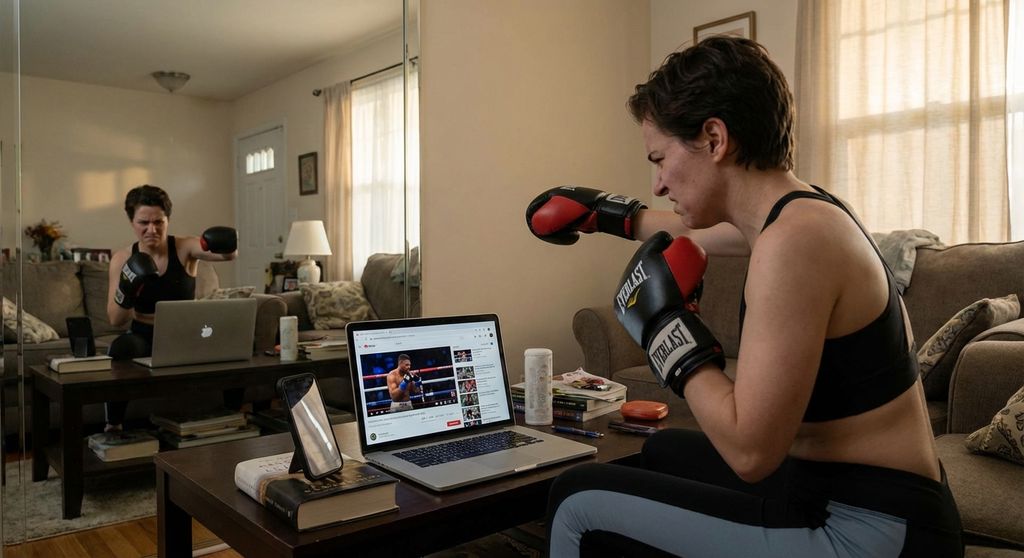
YouTube has made self-teaching more feasible for more things than at any previous point in history. You can learn to code, learn a language, learn woodworking, and learn to play guitar entirely from free online content. Boxing is not the same category.
This is not gatekeeping. It is a practical observation about what boxing involves and what you cannot learn without a partner and a coach.
What Self-Teaching Actually Produces
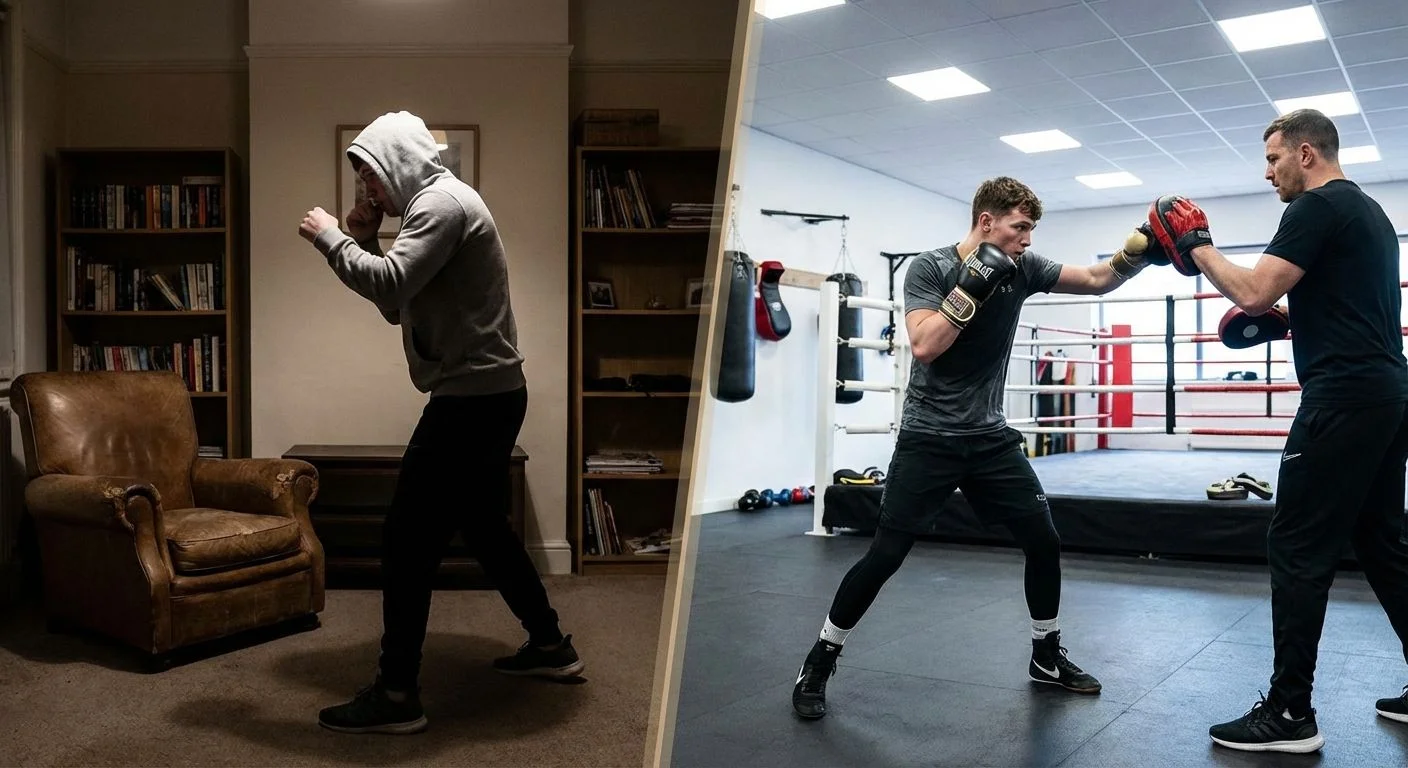
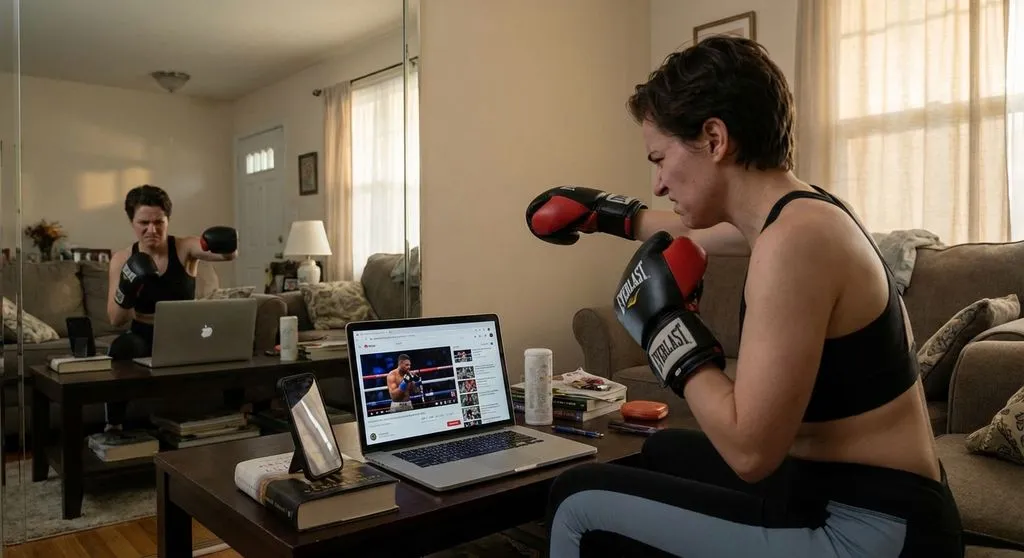
Many people begin boxing by watching tutorial videos and shadow boxing in their bedroom or garage. This produces something that looks a bit like boxing from the outside. You learn the approximate shape of a jab. You learn to move in something like a boxing stance. You throw something roughly resembling combinations.
What self-teaching consistently fails to produce is accuracy, timing, proper guard mechanics, or correct defensive movement. These cannot be learned from watching. They are developed through feedback, repetition with a partner, and correction in real time.
A self-taught boxer who joins a boxing gym after six months of YouTube training almost always has to un-learn several things before they can progress. The jab that looked fine in their bedroom mirror has a dropped elbow. The guard they established has their lead hand too low. These errors are invisible without an external point of reference.
The un-learning process takes longer than the original learning would have. This is the main practical cost of self-teaching boxing.
The Feedback Problem
The fundamental issue with self-teaching boxing is the feedback loop. When you learn to play piano, you hear immediately when you hit the wrong note. The feedback is instant and accurate. You can self-correct.
When you throw a jab in front of a mirror, the only feedback you receive is visual. You see the shape of the punch. You cannot feel whether your weight is transferring correctly. You cannot sense whether your shoulder is rotating into the punch or not. You cannot see your own guard dropping as your attention moves to the extension.
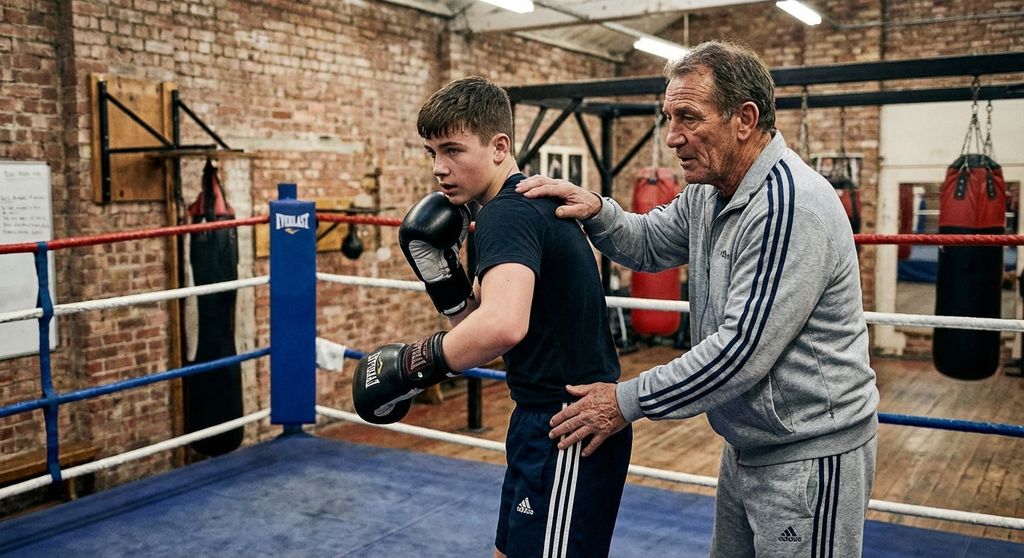
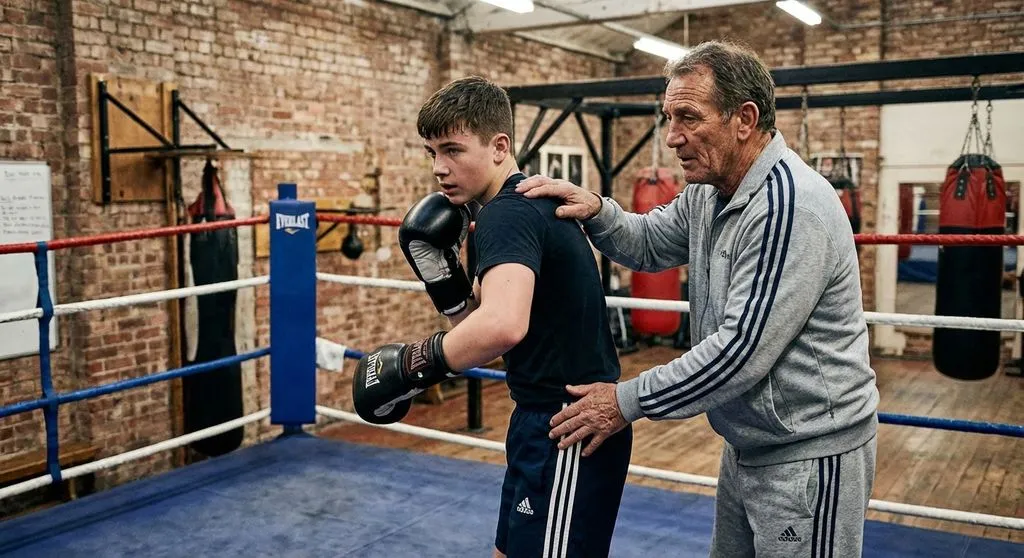
A boxing coach watching you throw ten jabs can identify the specific mechanical errors in each one. They can tell you which errors are causing which problems. They can give you a targeted correction drill that addresses the root cause rather than the symptom.
This feedback is not a luxury. For boxing specifically, it is the mechanism through which technique actually develops.
What You Can Learn Online
There are legitimate uses for online boxing content for people who are already training. England Boxing's coaching resources provide technical reference material that is useful to study alongside in-person coaching. Slow-motion footage of professional boxers is genuinely instructive for understanding mechanics once you already have a coach giving you the tactile feedback.
Understanding the theory behind combinations, footwork patterns, and defensive movement is valuable. Trying to learn those things without a coach is where the problems start.
The Injury Question
Self-taught boxers have higher rates of certain training injuries than coached boxers. The most common are wrist injuries from incorrect punch mechanics and shoulder injuries from poor guard mechanics under fatigue.
A coach corrects the guard drop that strains the shoulder. They teach the correct wrist alignment that protects the joint under impact. Self-teaching misses both of these corrections because neither is visible in a mirror.
Wrist injuries from punching with incorrect mechanics are slow to heal and can persist for months. They are almost entirely preventable with early coaching. They are very common in self-taught beginners.
The Honest Case for Starting With a Coach
Three to five boxing personal training sessions at the beginning costs significantly less than a month of gym membership and produces far faster technical development. You arrive at session three able to throw clean combinations. You arrive at session three months of YouTube training still throwing the same jab you started with.
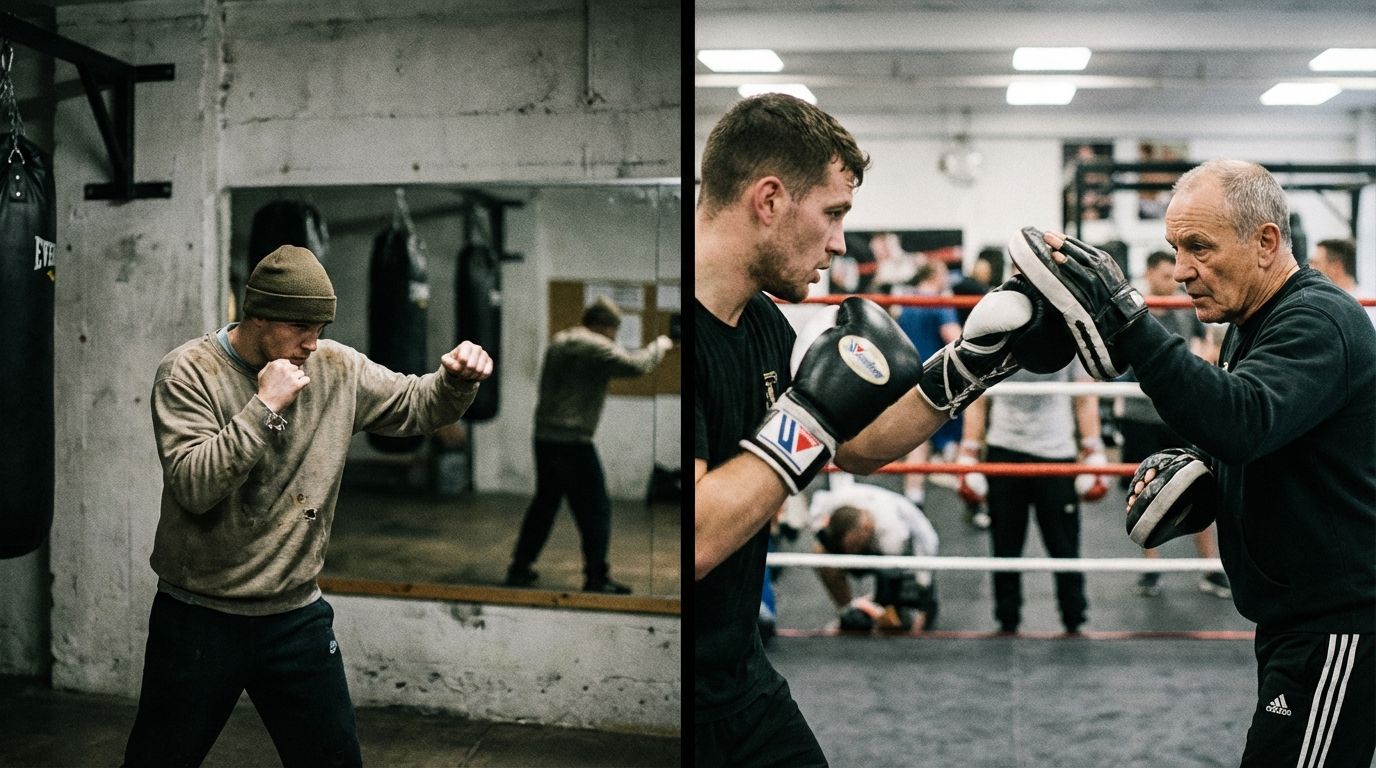
The comparison is stark when you see it in a gym environment. Boxers who start with coached sessions progress to competent-level technique in three months. Self-taught boxers who then seek coaching often take six months to reach the same standard because of what they have to un-learn first.
This is not a criticism of self-motivation or curiosity. Both are admirable. It is a practical argument that the fastest route to actually being able to box is to start with a coach.
To feel the difference a real coach makes in a private session, message us about boxing PT. You can also see the full class schedule or use the free class trial if group training interests you alongside personal sessions.
Frequently Asked Questions
Can you learn to box by yourself?
You can learn basic movement patterns and a rough approximation of punches by yourself. You cannot develop accurate technique, timing, or correct guard mechanics without a coach providing real-time feedback.
Is shadow boxing alone useful?
Shadow boxing is useful for practitioners who already have coaching. For beginners, shadow boxing without feedback reinforces incorrect patterns rather than correct ones.
What can I practise at home between boxing PT sessions?
According to Sport England Active Lives data, over 770,000 people in England box regularly. The majority train at clubs rather than alone, which suggests something about the value of coached instruction.
One r/amateur_boxing user put it bluntly: "You will suck. Embrace it and focus on improving something every session, one little thing at a time." That advice is easier to follow when someone is there to tell you what that one thing should be.
If you want private coached training, compare our personal training options. If you want a normal group class first, use the free class trial.
Your coach will advise on specific home exercises. Shadow boxing specific combinations the coach has taught you is useful. Skipping rope for conditioning is good. Avoid building new habits without coaching input.
How many PT sessions do I need before I can train independently?
Most people need at least 10-15 sessions of coaching before independent training is productive. Below that threshold, there is too much technique still to establish for self-practice to help more than it hinders.
Find a Boxing Personal Trainer Near You
H&G covers south and south-east London:
H&G Team
Writer at Honour & Glory Boxing Club, a community boxing gym in Kidbrooke, South East London.
Was this page helpful?
Your feedback helps us improve this page
Got questions about what you just read?
ASK OUR AI ASSISTANT ✨MORE LIKE THIS
WANT TO JOIN US?
Book a free trial session and see what we're all about.
Claim a Free Trial