Boxing Personal Training Results: A Realistic Timeline
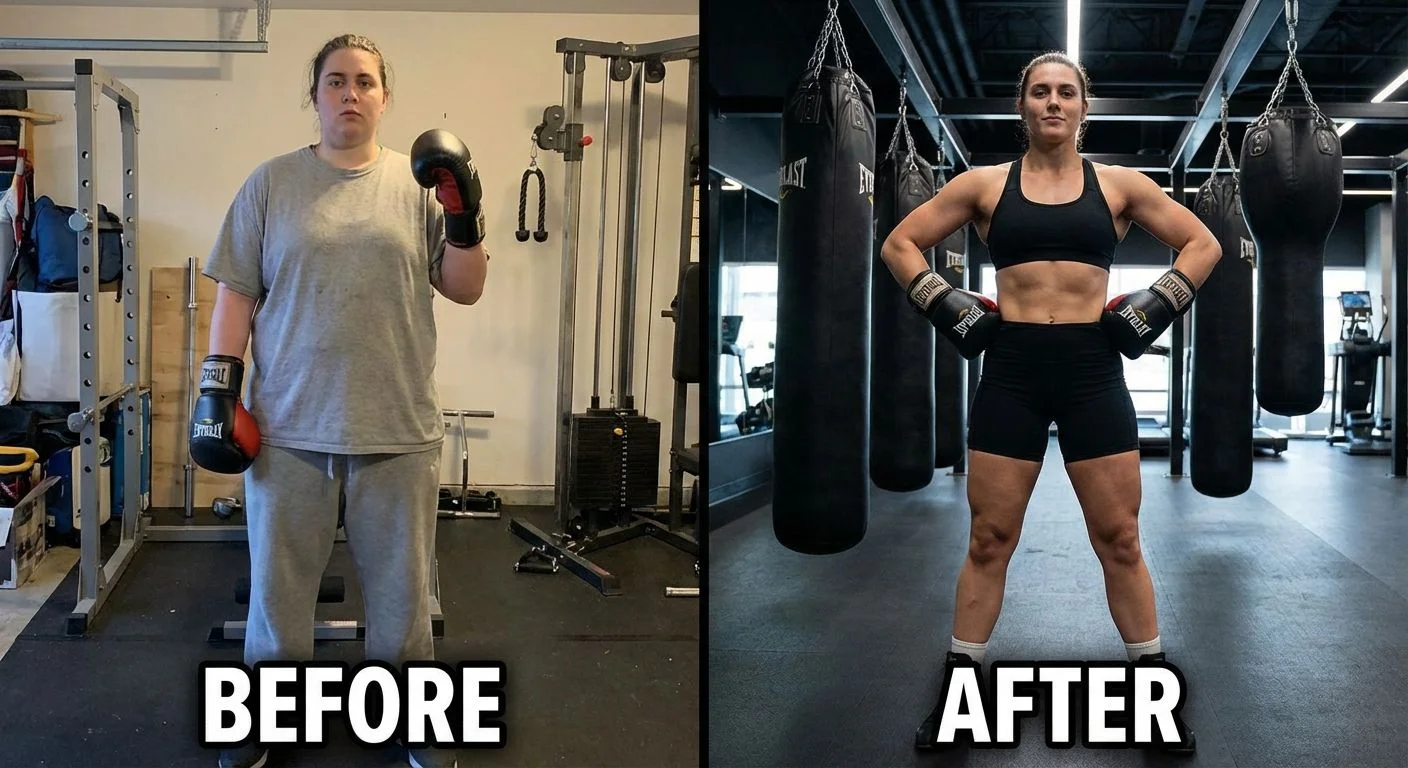
People considering boxing personal training want to know what they will get and when. This is a reasonable question. The fitness industry has a poor record of answering it honestly. Here is a realistic month-by-month account of what boxing PT produces and over what timeframe.
The timeframes below are based on twice-weekly personal training sessions. More frequent training produces faster results. Less frequent training extends the timelines.
Month 1: Foundation Building
Fitness changes: Measurable cardiovascular improvement begins. Heart rate during the same work decreases. Recovery between rounds improves. Resting heart rate starts to fall. Research from the American College of Sports Medicine confirms aerobic adaptations begin within three to four weeks of twice-weekly HIIT-intensity training.
Technical changes: Basic stance, guard, jab, and cross established. Hook introduced. First combinations drilled. Pad work begins. Motor patterns are present but not fluid.
Body composition: Minimal visible change. Some weight change from water loss and increased muscle activity in the hands and shoulders. The body composition changes that matter are not yet visible.
How it feels: Hard but interesting. Every session contains new learning. The cognitive engagement is high.
Month 2: Consolidation
Fitness changes: Stamina through full 60-minute sessions improves significantly. You can complete proper three-minute rounds without stopping. Resting heart rate continues to decline. Cardiovascular adaptation research published in the European Journal of Applied Physiology demonstrates significant VO2 max improvements from 8 weeks of twice-weekly high-intensity training.
Technical changes: Combinations flow more naturally. Defensive movement introduced: head movement, slipping. Footwork while combining. Sessions become tactically interesting.
Body composition: Visible changes begin. Clothes fit differently. Some people notice muscle definition in the shoulders and arms. Fat loss is measurable with body composition testing.
How it feels: More like boxing, less like instruction. Sessions are harder because the intensity is higher, but also more rewarding because the skill level is higher.
Month 3: Developing Capability
Fitness changes: You are genuinely fit. The conditioning element of sessions is not the limiting factor anymore. Technique is. You can maintain guard and combinations throughout a full session without fatigue causing technical breakdown.
Technical changes: Complex combinations. Counter-punching basics. Defensive combinations. If interested in sparring, your coach may begin controlled introduction at this stage.
Body composition: Significant visible changes for most people. Fat loss is consistent. Muscle development in the upper body is noticeable. Waistline changes are typical.
How it feels: Competent. You understand what the sport requires and you can do it at a basic level. This is a qualitatively important milestone.
Month 6: Genuine Skill
By month six of twice-weekly boxing PT, most people have developed genuine boxing skill. Not competitive-level skill, but the ability to box with real technique, move intelligently, and understand what they are doing and why.
England Boxing defines amateur boxing development milestones that most dedicated training boxers reach within six months of regular coaching. These include basic four-punch combination fluency, guard maintenance under movement, and controlled sparring readiness.
Body composition changes at six months are substantial for most people. Combined with appropriate nutrition, six months of twice-weekly boxing PT produces significant fat loss and upper body muscle development.
Month 12: Sport-Level Capability
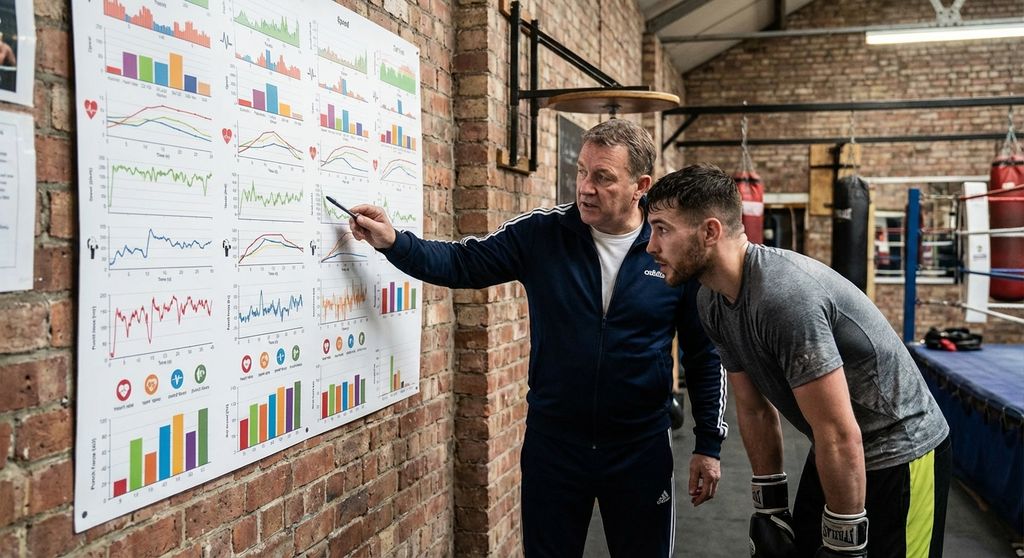
One year of consistent twice-weekly boxing PT produces a boxer who can handle controlled sparring, understands ring craft, and has the conditioning to compete in a fitness context. Whether they compete or not, they have a skill that is genuinely theirs and a fitness level that supports active daily life.
The skill development never stops. Twelve months in, the improvements continue. Combinations become crisper. Timing improves. Defensive awareness develops. The progression does not plateau the way general fitness training does.
What Affects the Timeline
The timelines above are averages. Individual variation is significant. Factors that accelerate progress:
- Higher session frequency (three per week vs two)
- Prior athletic background
- Natural proprioception and coordination
- Supplementing with group class sessions
Factors that slow progress:
- Lower session frequency
- Irregular attendance
- Poor sleep and nutrition
- Injury
A Note on Expectations
Boxing personal training produces real, measurable results across technical skill, fitness, and body composition. The timelines are longer than many fitness marketing suggests. Visible body composition changes take three months, not three weeks.
What happens faster than expected is the skill development. Most people are genuinely surprised at how much they can do after eight weeks of twice-weekly coaching. The technical progress is faster than the body composition progress. This matters because the skill development is what makes people keep coming back.
Related Boxing PT Guides
For the starting point, read Boxing PT for Complete Beginners. If you are deciding how often to train, read How Often Should You Do Boxing Personal Training?. If price is the blocker, read Is Boxing PT Worth the Money?.
Find a Boxing Personal Trainer Near You
H&G coaches cover south and south-east London. Find sessions near you:
- personal boxing trainer in Catford
- personal boxing trainer in Brockley
- personal boxing trainer in Forest Hill
- personal boxing trainer in Dulwich
- personal boxing trainer in Peckham
View all personal training locations
To start a paid coaching plan, message us about boxing PT. If you want a group-class route alongside personal sessions, see the class schedule or book a free class trial.
Frequently Asked Questions
How long before I see results from boxing PT?
Cardiovascular fitness improves within three to four weeks. Visible body composition changes typically begin at six to eight weeks. Technical skill milestones occur at one month, three months, and six months.
Does boxing PT produce faster results than gym training?
For cardiovascular fitness and body composition combined, boxing PT produces comparable or better results than general gym training. For specific strength gains (maximum strength in individual muscle groups), targeted weight training has an advantage.
Can I speed up the results timeline?
Our personal training programme is structured around progressive skill development - each session builds on the last.
A recurring theme on r/amateur_boxing is that progress in boxing compounds: "Before you know it you are as good as the other amateur fighter boys." The timeline varies but the trajectory is consistent.
Increasing session frequency from two to three per week is the most effective way to accelerate results. Adding supplementary conditioning work between sessions (skipping, running) also helps, provided recovery is managed.
Are the results permanent?
Technical skills established through boxing coaching are retained longer than most fitness adaptations. Research on motor memory suggests procedural skills persist even through long breaks from training. Fitness adaptations regress if training stops but return faster on resumption than they took to build originally.
H&G Team
Writer at Honour & Glory Boxing Club, a community boxing gym in Kidbrooke, South East London.
Was this page helpful?
Your feedback helps us improve this page
Got questions about what you just read?
ASK OUR AI ASSISTANT ✨MORE LIKE THIS
WANT TO JOIN US?
Book a free trial session and see what we're all about.
Claim a Free Trial