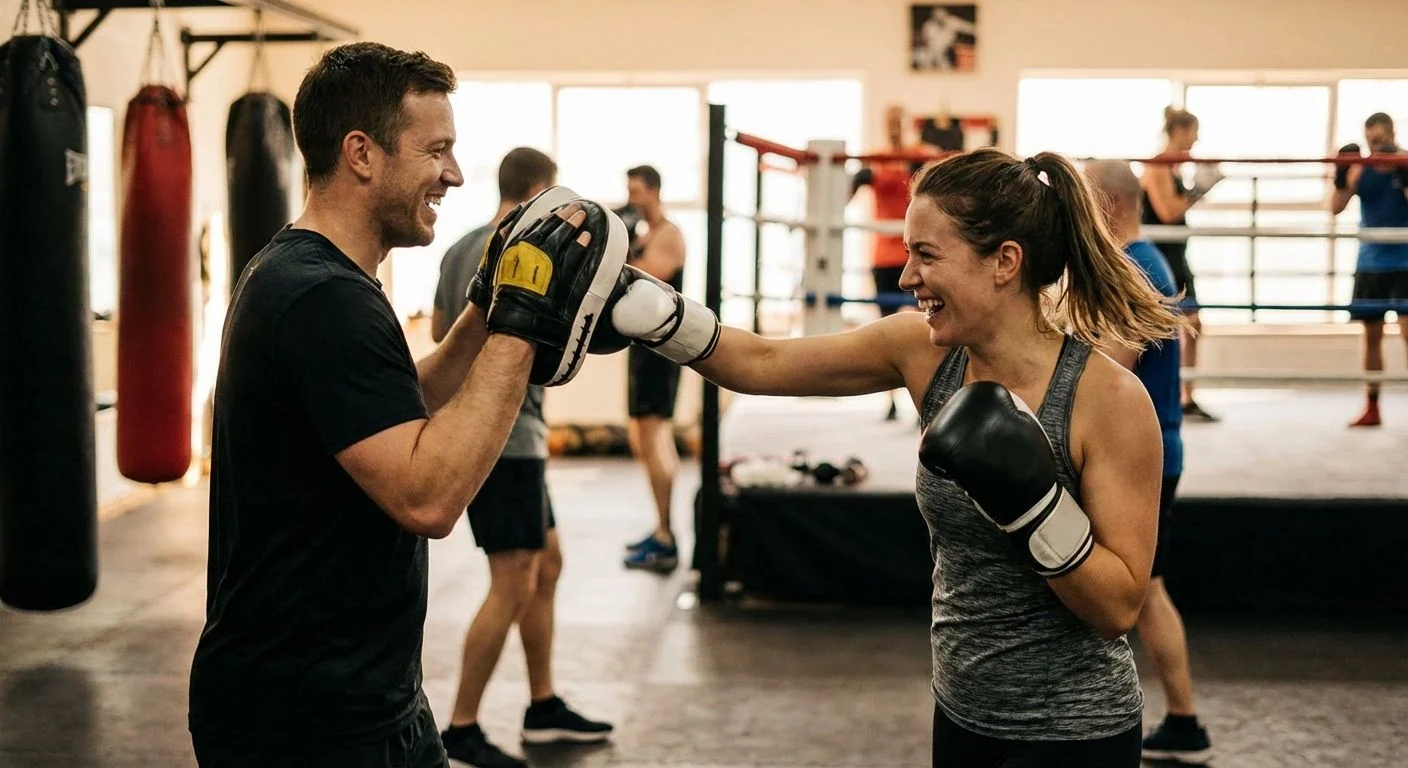
Research on partner exercise shows that working out with a partner increases adherence and consistency significantly compared to solo training. England Boxing's personal training pathway defines the qualifications required to deliver private coaching sessions.
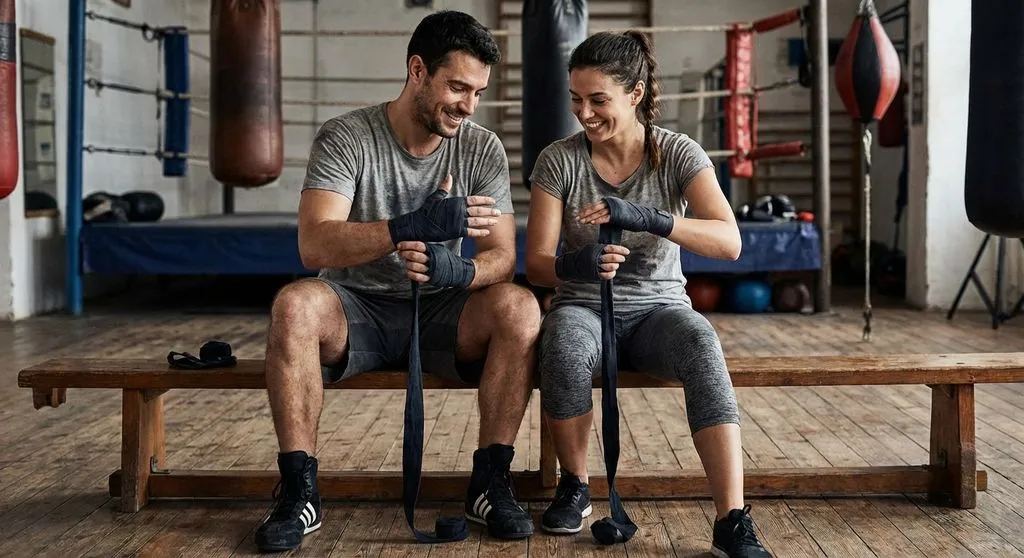
Couples who want to train together have more options than they might realise in boxing. It is not the obvious choice for couples' fitness, but it works particularly well for several reasons that are worth understanding.
What Semi-Private Boxing Sessions Look Like
Most boxing clubs, including Honour and Glory, offer the option of booking a single coaching session for two people at the same time. This is typically called semi-private training.
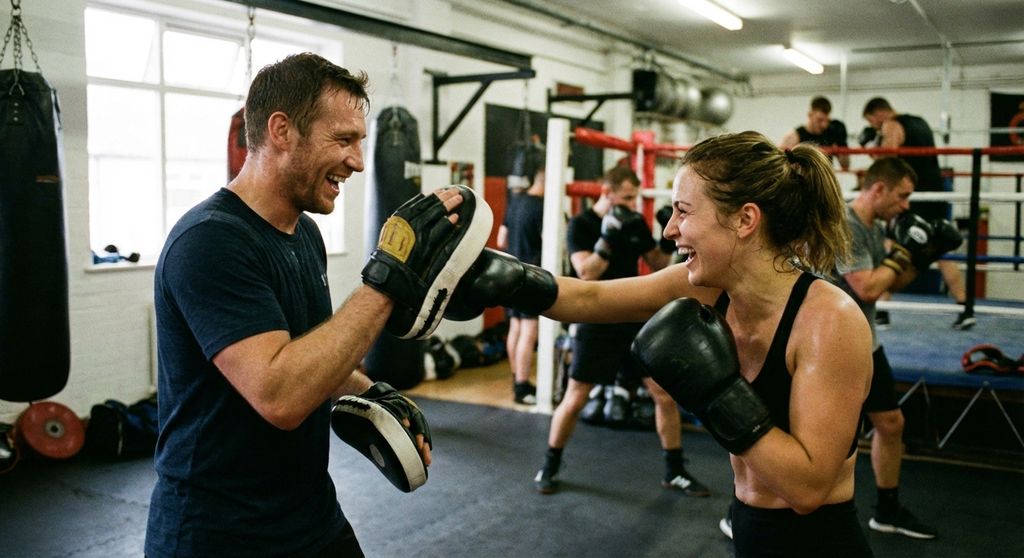
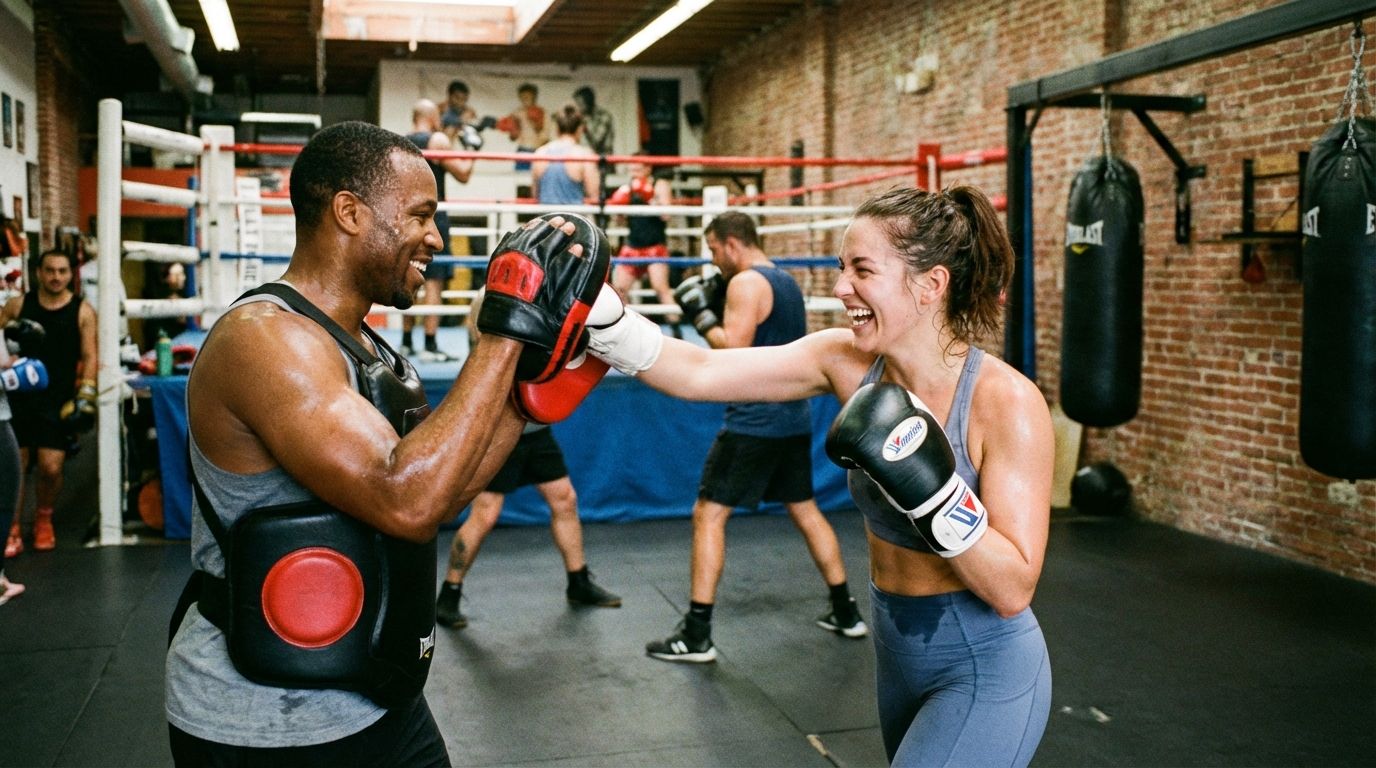
A semi-private boxing session with two clients operates differently from two separate private sessions. The coach alternates between clients: holding pads for one while the other works the bag, then switching. This means each client gets roughly half the direct coach contact of a fully private session, but the pace of the session is often higher because you are working while the coach is with your partner.
The practical result is that semi-private sessions cost less than two individual private sessions combined (confirm pricing with the gym directly) while delivering a meaningful training experience for both people.
Why Boxing Works for Couples
The obvious challenge with couples training together in any sport is that fitness and skill levels rarely match exactly. Boxing personal training accommodates this better than most disciplines because the coach designs separate programmes for each person within the same session.
Partner A might be working on basic jab-cross combinations while Partner B is drilling defensive head movement and counter-punching. The coach holds pads calibrated to each person's level. They both work hard. They both progress. The session serves two different development trajectories simultaneously.
This is harder to achieve in yoga, pilates, or gym-based training, where the shared programme tends toward the lower of the two fitness levels.
The Motivational Effect
There is substantial research on the social facilitation of exercise. A 2012 study from Michigan State University found that exercising with a partner consistently increased workout intensity and duration compared to training alone.
The effect is stronger when the partner is of slightly higher fitness or skill level. It is also strong when there is social accountability: both people know the other has committed to showing up.
Many couples who train together cite accountability as the primary benefit. When one person does not feel like training, the other keeps them to the commitment. This is particularly valuable in the first month of boxing PT, when the sessions are hardest and the temptation to skip is highest.
What Couples Often Get Wrong
The main mistake couples make when training together is competitiveness in a context where competition is not helpful. Recreational boxing personal training is not a competition. You are not trying to hit harder than your partner or progress faster. These are your own developments.
When one partner progresses faster than the other, which is normal and expected, it can create friction if the training context has a competitive frame. A good boxing PT coach manages this explicitly: they are clear that each person is on their own development path, and they design sessions that demonstrate progress to each individual independently.
If you are training as a couple, discuss this dynamic with your coach at the first session. A coach who understands this dynamic will structure the sessions to support both people rather than inadvertently creating comparison.
The Pad-Work Caveat
One thing that does not work well in semi-private couple's boxing training is partner pad holding. Some gyms suggest that one partner holds the pads for the other as part of a cost-saving model. This should not happen until both partners have significant experience with pad holding technique.
Holding pads incorrectly is a genuine injury risk for the holder. The angles, the position, and the stability of the pads all affect the safety of the person punching and the person holding. A coach holds pads with experience and intention. A partner with two months of boxing experience does not have the pad-holding skill to be safe.
At Honour and Glory, the coach holds pads in all sessions. Partner participation in pad holding is introduced only when appropriate coaching has been done on technique.
Booking Couple's Sessions
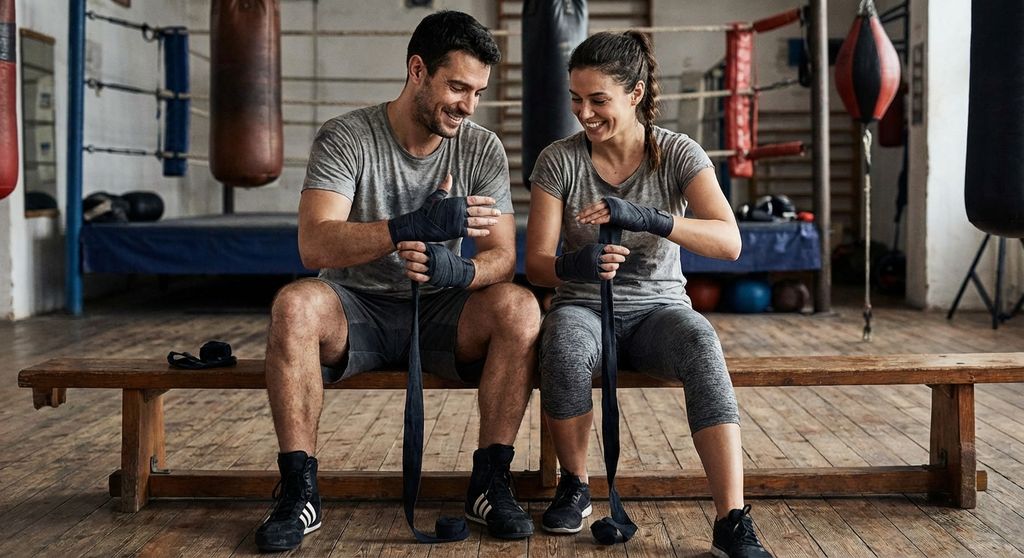
To book a semi-private session for two people, contact the gym via WhatsApp and specify that you want to train together. Your coach will discuss the best session structure given both people's experience levels and goals.
For paid semi-private coaching, use the Duo PT page or message us on WhatsApp and say you want to train together. If you mainly want a normal group class first, use the free class trial instead.
Frequently Asked Questions
Do both people need to be the same fitness level for couples boxing PT?
No. The coach designs the session to serve both people at their respective levels. Different fitness and skill levels within a couple are the norm, not the exception.
Is boxing safe as a couples activity?
Non-sparring boxing training is safe. There is no partner contact in personal training sessions unless both people explicitly request and are ready for controlled sparring. Standard boxing PT involves individual bag and pad work with the coach.
Do we train together or separately in a semi-private session?
At Honour and Glory, we run 2-on-1 boxing personal training sessions designed exactly for this. One coach, two people, 60 minutes. One of you works the pads with the coach while the other works the bag, then you rotate. Duo PT is £70 total as a single session, £60/session on a 5-pack, and £50/session on a 10-pack. The first session is £35 total.
Couples training comes up periodically on boxing forums. The consensus is that it works best when both people are at a similar fitness level and neither has significantly more experience. If one partner is much further ahead, separate sessions with occasional joint ones tends to work better.
You train in the same space with the same coach, but your programming is individual. The coach alternates between you, holding pads for each and designing drills specific to your respective levels.
What if one of us is much more experienced than the other?
The experienced partner often finds value in a semi-private session because the coach can assign more complex self-directed work (specific bag combinations, shadow boxing with a game plan) while spending more time with the less experienced partner. The experienced partner also benefits from observing the instruction given to their partner, which often reveals mechanics they had not consciously considered.
Related Boxing PT Guides
If either person is new to boxing, start with Boxing PT for Complete Beginners. If you are comparing solo and shared coaching, read Is Boxing PT Worth the Money?. For training frequency, read How Often Should You Do Boxing Personal Training?.
Find a Boxing Personal Trainer Near You
H&G covers south and south-east London:
H&G Team
Writer at Honour & Glory Boxing Club, a community boxing gym in Kidbrooke, South East London.
Was this page helpful?
Your feedback helps us improve this page
Got questions about what you just read?
ASK OUR AI ASSISTANT ✨MORE LIKE THIS
WANT TO JOIN US?
Book a free trial session and see what we're all about.
Claim a Free Trial