Boxing as Therapy for Mental Health
Boxing as Therapy: How the Gym Supports Mental Health in London
A reasonable objection to this article's title: therapy is a clinical process conducted by qualified mental health professionals, and boxing is a sport. Conflating them does a disservice to both.
That objection is correct, and worth making clear at the outset. Boxing is not a substitute for clinical mental health treatment. If you are experiencing significant depression, anxiety disorder, trauma, or any other diagnosable condition, please engage with qualified mental health professionals. No boxing coach should be telling you otherwise.
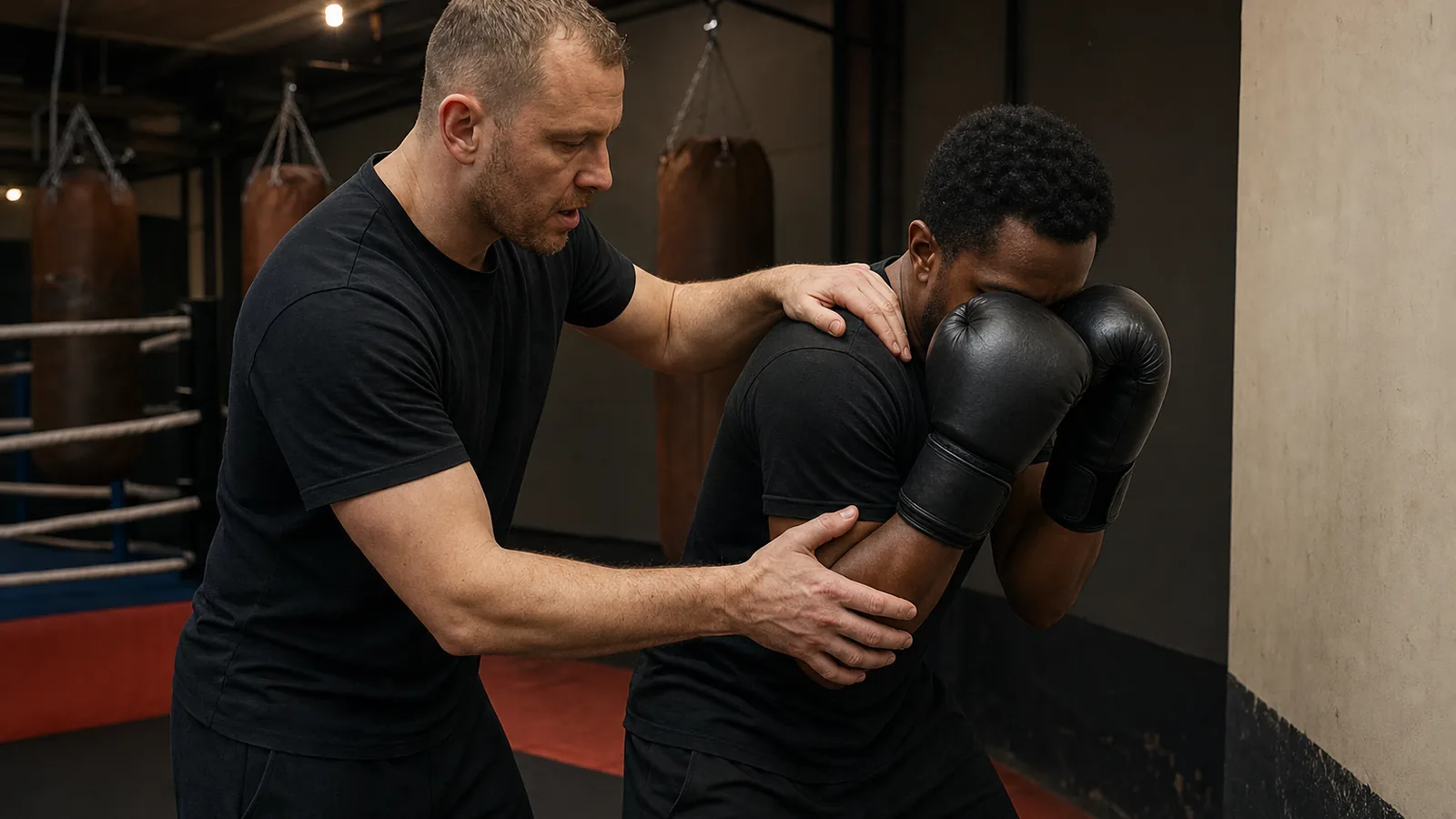
What boxing is, and this is well-supported by evidence and consistent with what coaches observe across years of working with people, is an exceptionally effective complement to good mental health. And for many people who are not at clinical level but are nonetheless struggling with the weight of modern life, boxing provides genuine and significant relief that other activities do not.
The Physiology of Why It Works
Exercise in general has a positive effect on mental health through several well-understood mechanisms: endorphin release, reduction in cortisol levels, improved sleep, and the sense of agency that comes from physical capability. These effects are not specific to boxing.
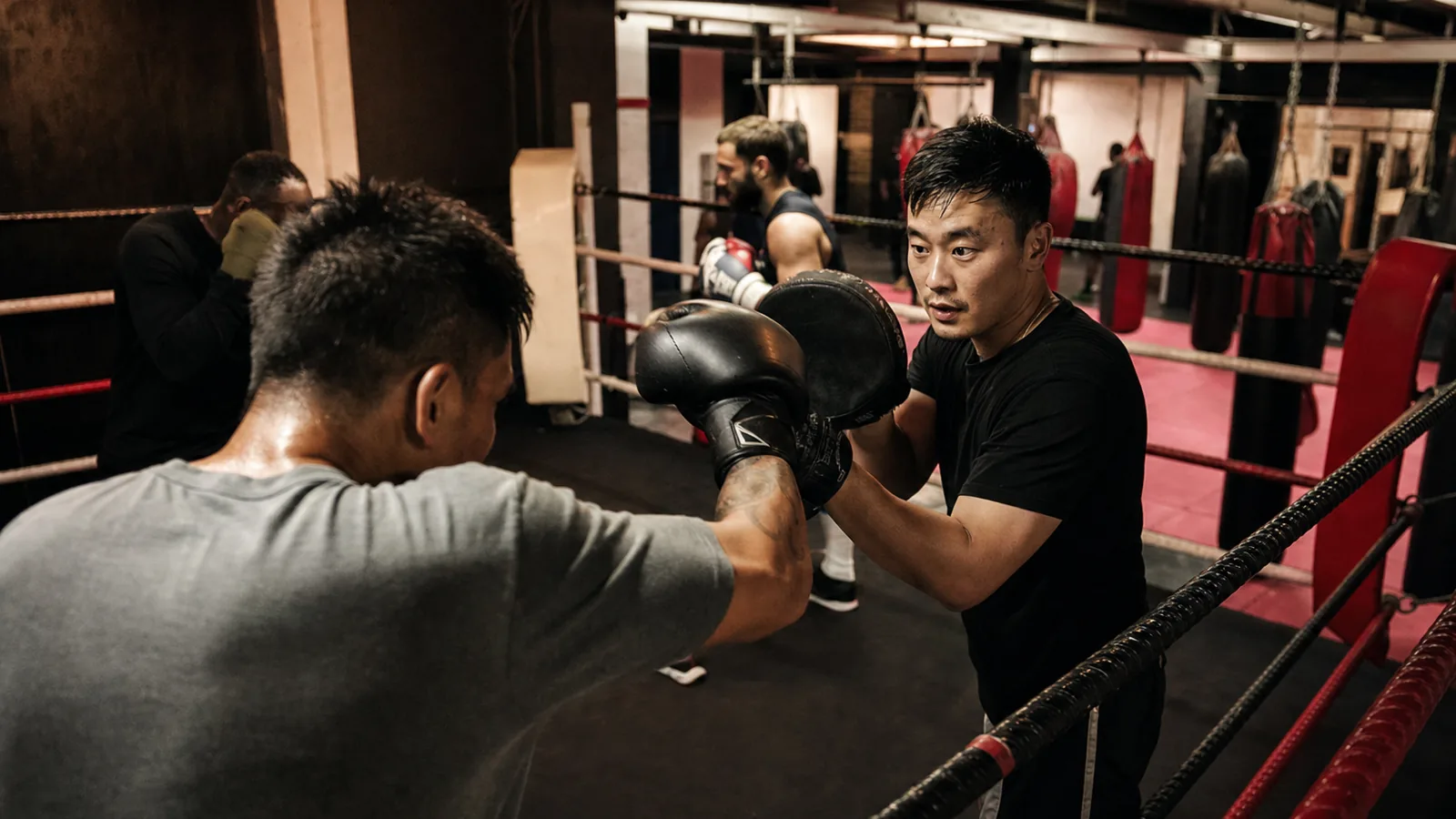
What boxing adds, beyond general exercise, is the specific combination of physical intensity and cognitive engagement. The brain during a focused boxing session is operating very differently from the brain during a run or a gym session. It is actively processing information: the coach's instructions, the target on the pads, the adjustment needed in footwork or guard. This cognitive load prevents the kind of self-referential rumination that characterises many anxiety and depressive states.
Put simply, you cannot spiral mentally when your full attention is occupied by what your body is doing. This is not avoidance in the clinical sense. It is a genuine interruption of the mental patterns that sustain low mood and anxiety. And regular interruption of those patterns, over weeks and months, changes them.
The Role of Physical Exhaustion

There is a specific quality to physical exhaustion that has no equivalent in mental fatigue. The tiredness after a proper boxing session is the tiredness of having fully used your body. It is a clean feeling, even when it aches. And it consistently produces sleep.
For people dealing with anxiety in particular, sleep disruption is often a compounding problem. Anxiety prevents sleep, poor sleep worsens anxiety. The physical exhaustion of regular boxing training breaks this loop by creating a sleep pressure that anxiety has difficulty overcoming.
Adults at Honour & Glory Boxing Club who come to training with mental health as a primary motivation regularly report that sleep improvement is one of the first benefits they notice, often within the first two or three weeks of consistent training. Other things improve more gradually. Sleep tends to change quickly.
What the Gym Environment Provides
The clinical mental health setting is necessarily private and introspective. The therapeutic work happens through language and reflection. This is important and valuable. But it is also the only thing available in that setting, which means the person's internal world is both the subject and the context of the work.
The gym provides the opposite. The environment is external, physical, and communal. Your attention is directed outward: towards the coach, the pads, the bag, the other members in the room. Your internal world does not disappear, but it is not the primary focus, and that shift in orientation is itself therapeutic for many people.
The community aspect of a boxing gym is also something that mental health professionals increasingly recognise as important. Social connection, shared endeavour, and the sense of belonging to a group engaged in a common pursuit are all factors that support mental wellbeing. The gym community provides all of these in a context that does not require you to discuss your feelings, which is a significant advantage for many people who benefit from connection but resist emotional disclosure.
Discipline as Mental Health Tool
The structure and discipline of boxing training deserves specific mention. For people experiencing depression or anxiety, the loss of structure is often a compounding factor. Days without shape, routines that collapse, the inability to find motivation to engage with activities. These are symptoms and also causes.
The structure of a regular training schedule is a form of external scaffolding. The session exists at a specific time. The coach expects you. Other members will notice if you are not there. These external anchors help sustain participation during the periods when internal motivation is insufficient. And participation, even reluctant participation, typically produces the mood improvement that makes subsequent participation more voluntary.
At Honour & Glory Boxing Club, 122 Broad Walk, London SE3 8ND, the regular class timetable, BBBofC licensed coaching, and the England Alliance Boxing framework all contribute to a structured, predictable environment. Sessions run Monday through Thursday evenings and Saturday mornings. Free parking is available.
This consistency is not incidental. It is one of the features that makes the gym a reliable mental health resource rather than an unreliable one.
The Agency Argument
This is perhaps the most important thing boxing does for mental health, and the hardest to articulate briefly.
Boxing teaches you that you can do hard things. That is not a motivational poster. It is a specific learning that happens through experience. You were unable to throw a proper jab when you started. Now you can. You found the first sessions exhausting. Now you complete them. You were nervous about sparring. You did it anyway and you were fine.
Each of these moments is a data point in your understanding of your own capability. For people whose mental health has been shaped by helplessness, by the sense that things happen to them rather than being influenced by them, this accumulation of evidence about their own competence is quietly transformative.
The technical name for this in clinical psychology is self-efficacy. Boxing, across months of training, builds self-efficacy through direct physical experience. That is a mechanism that talking therapies can support but not replicate.
A Practical Note for People in Mental Health Recovery
If you are currently in treatment for a mental health condition and are considering boxing, mention it to your treating professional. There is no reason they would object, but it is worth the conversation. Some therapists actively recommend physical activity with a structured social element as an adjunct to clinical treatment.
Arrive at the gym and be honest with the coaching team about where you are. You do not need to disclose your clinical history. But if you are having a difficult day, or if you find certain elements of training challenging for non-physical reasons, a good coach wants to know. The coaches at Honour & Glory Boxing Club work with a full range of people and they are not interested in a performance of wellness from new members.
The Seniors group (ages seventeen and above) at our Kidbrooke gym includes adults at every stage of mental health and life experience. The environment is focused and respectful. You will be treated as an individual pursuing something worthwhile, because that is what you are.
Claim a free trial session at honourandglory.co.uk/trial. Whatever brings you through the door, you are welcome.
If you are searching for boxing classes near you in South East London, we cover what to expect, how to get here, and how to book a free trial.
Rate this article
Your feedback helps us write better content
Honour and Glory Boxing Club
Honour and Glory is a boxing club in Kidbrooke, SE3 — 4 minutes from Kidbrooke by car, or 17 minutes by public transport (Bus 335). The club runs classes seven days a week for adults and children from age five, with no joining fee and no contract.
Head coach Anton Pattenden holds a British Boxing Board of Control trainer's licence — the same licence that governs professional boxing in the UK. Classes run from recreational fitness sessions through to amateur competition preparation. The first session is always free.
Address
122 Broad Walk, Kidbrooke, London SE3 8ND
Classes
Adults, Women's, Juniors (10-16), Infants (5-9), Amateur
First session
Free. No booking required. Just turn up at class time.
MORE ABOUT BOXING NEAR KIDBROOKE
Amateur Boxing in Kidbrooke: How to Start
A practical guide to starting amateur boxing in Kidbrooke SE3, with Honour and Glory Boxing Club - from your first session to your first ABA competition.
Back to School Boxing in South East London
September back to school time is perfect for starting boxing in SE London. Honour & Glory in Kidbrooke offers structured junior boxing for ages 5-16.
Best Amateur Boxing in SE London
Serious amateur boxing in South East London. Honour & Glory in Kidbrooke SE3 offers BBBofC-licensed coaching and England Alliance Boxing competition pathways.
READY TO START?
We are just 4 minutes from Kidbrooke. Book a free trial and see what real boxing training looks like.
Claim a Free Trial