Boxing for Weight Loss
Boxing is one of the most effective exercises for losing weight. But the internet is full of inflated claims and miracle transformation stories. Here is what the published research actually says, what you can realistically expect, and why boxing succeeds where other workouts fail.

The Science
A 2022 scoping review published in the American Journal of Lifestyle Medicine examined multiple studies on the physical health outcomes of boxing training programmes. The findings go beyond simple calorie burn: participants in boxing-style HIIT programmes achieved a 13.2% reduction in body fat percentage over 12 weeks, significantly outperforming a brisk walking control group over the same period.
Harvard Medical School data confirms that a 70kg person burns approximately 500-800 calories per hour during a boxing training session. A study by supplement brand Forza found that boxing burns approximately 800 calories per hour, placing it above every other sport tested, including squash (748 cal/hr) and rowing (740 cal/hr).
These are not marketing claims. They are published, peer-reviewed findings. Boxing works for weight loss, and the data is clear about why.
Why Boxing Works When Other Exercise Does Not
Many people have tried running, gym memberships, home workouts, and various diets without lasting results. Boxing often succeeds where these approaches fail, and there are specific, evidence-based reasons for this.
1. You Actually Show Up
The single biggest predictor of weight loss from exercise is consistency. The most effective workout is the one you do repeatedly. Boxing has better adherence rates than most other exercise forms because it is genuinely engaging. Learning combinations, working with a partner on pads, and progressing through skill levels provides constant novelty. A gym treadmill cannot compete with that. Nobody has ever said "I cannot wait to get back on the treadmill." People say that about boxing constantly.
2. You Cannot Coast
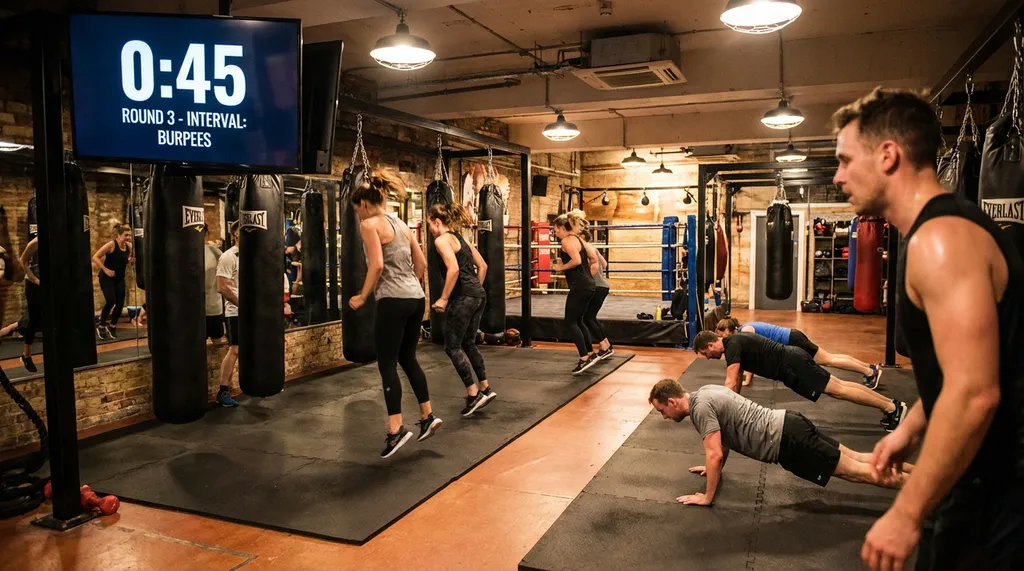
In a boxing session, the coach sets the pace. The rounds are timed. Other people are working hard around you. There is a social accountability that prevents you from quietly reducing your effort mid-session. Compare this with a solo gym visit (where you can sit on your phone between sets) or a jog (where you can slow to a walk whenever you like). Boxing sessions maintain a consistently high intensity because the environment demands it.

3. The Afterburn Effect (EPOC)
Boxing training closely mirrors High-Intensity Interval Training (HIIT): bursts of explosive effort (combinations on the bag) alternating with active recovery (movement between stations, resetting). This pattern triggers Excess Post-Exercise Oxygen Consumption (EPOC), which elevates your metabolism for hours after the session ends. Research suggests HIIT-style training burns up to 30% more total calories than steady-state cardio when you account for the post-exercise metabolic effect.
4. You Build Muscle Simultaneously
Most pure cardio (running, cycling, swimming) burns calories but does not build significant muscle. Boxing builds lean muscle across your entire body: shoulders, arms, core, and legs. More muscle means a higher basal metabolic rate. Your body burns more calories even when you are resting, sleeping, or sitting at your desk. This compound effect accelerates weight loss over time and prevents the metabolic slowdown that plagues calorie-restriction diets.
Realistic Weight Loss Expectations
Projected results (boxing 3x per week, no major dietary changes)
Note: Adding sensible dietary adjustments accelerates these results significantly. Individual results vary by starting weight, age, and genetics.
Important context: The scales may not tell the full story. Boxing builds muscle while burning fat, which means your weight may stay relatively stable even as your body composition changes dramatically. Your waistline shrinks but the number on the scales barely moves. Measurements, how your clothes fit, and the mirror are better indicators than weight alone. Many boxers at Honour and Glory report dropping a full clothing size before seeing significant scale movement.
Boxing vs Other Weight Loss Methods
Calories per hour (70kg person)
Raw calorie burn is only one factor. Boxing outperforms most alternatives on three additional dimensions that matter for sustained weight loss: adherence (you keep coming back because it is engaging), afterburn (elevated metabolism for hours post-session), and simultaneous muscle building (higher resting metabolic rate). When you factor in all four dimensions, boxing is the most effective single activity for body composition change.
Common Concerns
"I am too unfit to start boxing"
Every person who has ever trained at a boxing club was too unfit when they started. That is the entire point. Sessions at community clubs like Honour and Glory are structured so beginners can participate immediately. The coach scales the intensity to your level. Nobody expects you to keep pace with experienced boxers on day one.
"I am too heavy to box"
Boxing is a sport with weight categories. Some of the greatest boxers in history weighed over 18 stone. There is no weight limit for training. Heavier people burn more calories per session, making boxing even more effective for weight loss at higher body weights. Your weight is your starting point, not a barrier.
"Do I have to get punched?"
No. Sparring is entirely optional. Many people train boxing for years without ever sparring. Bag work, pad work, shadow boxing, and conditioning circuits provide a complete, high-calorie-burn workout with zero contact.
"What does it cost?"
At a community boxing club, sessions typically cost £5-£10. At Honour and Glory in Kidbrooke, there are no contracts and no joining fees. Compare that to boutique HIIT studios (£15-£25 per class) or personal trainers (£50-£120 per hour in London). Boxing is the most cost-effective high-intensity workout available.

The Bottom Line
Boxing works for weight loss because it combines high calorie burn, muscle building, genuine engagement, and social accountability in a single activity. It also teaches you a real skill, which gives you a reason to keep training long after the initial weight loss motivation fades. Many people who start boxing to lose weight stay for the skill, the confidence, and the community. That long-term adherence is what ultimately produces lasting results.
The research supports it. The calorie data supports it. The adherence data supports it. If you have tried other approaches and they have not stuck, boxing is worth trying. Not because it is magic, but because it solves the problems that cause most weight loss programmes to fail: boredom, inconsistency, and lack of community.
Rate this article
Your feedback helps us write better content
The best way to decide? Come and try it.
Your first session is free. No contract, no commitment.
Book Your Free Boxing Session
Your first session is free. No contract, no joining fee, no catches.
📍 122 Broad Walk, SE3 8ND · Pay as you go from £5