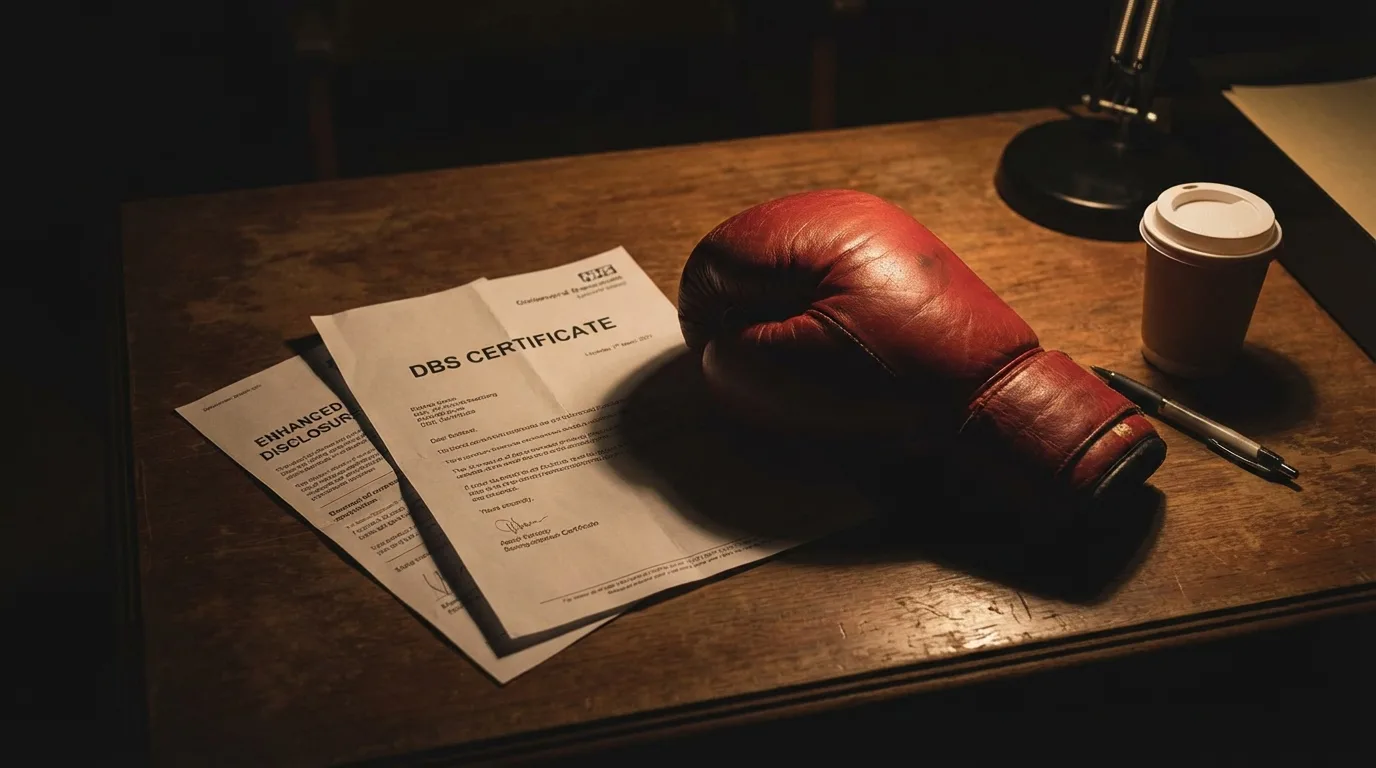
Most parents who bring a child to a boxing gym for the first time have one question they do not ask out loud: is this person safe to be around my child?
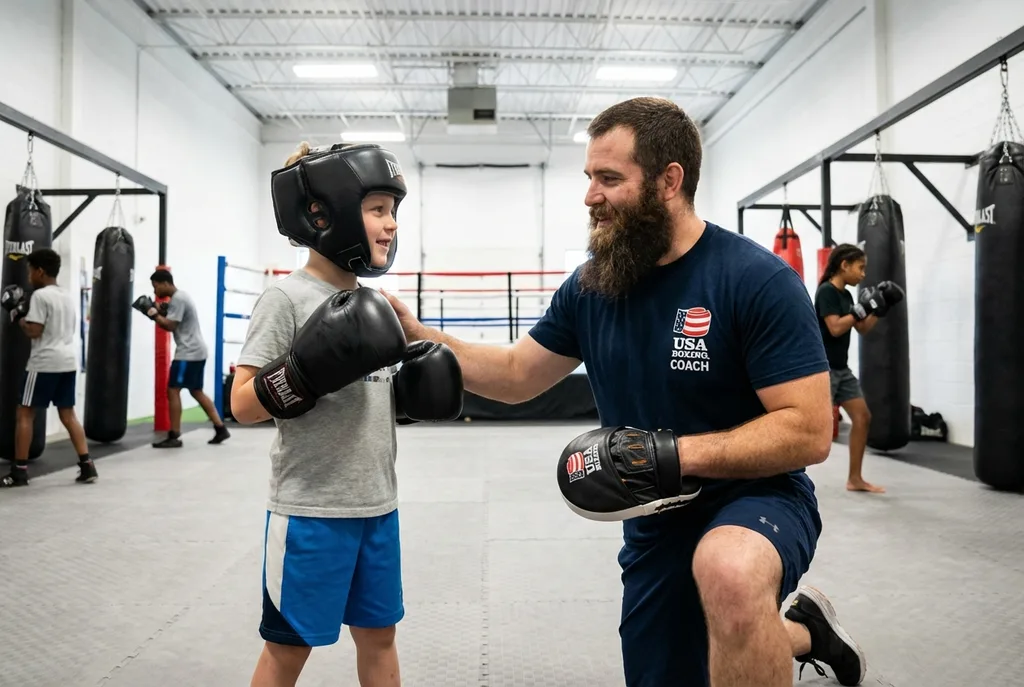
It is a reasonable question. Boxing coaches work in a position of authority. They are alone with children, they touch children to correct technique, and they build relationships that carry real influence. The DBS system exists precisely because society has decided that people in these roles should be checked.
This article explains what an enhanced DBS check means, what it covers, what it does not cover, and how you can verify that a coach at any club actually holds one.
What a DBS Check Is
The Disclosure and Barring Service (DBS) is a government body that processes criminal record checks for people working with children or vulnerable adults. An enhanced DBS check is the most thorough type available and is required for anyone in a position of regular unsupervised contact with children.
- Spent and unspent convictions
- Cautions, reprimands, and final warnings
- Any information held by police that is reasonably considered relevant
- Whether the individual is on the Children's Barred List (prohibited from working with children)
The Children's Barred List is the critical element. Being on it is a criminal bar on working with children. An enhanced DBS check with barred list access is the only way to verify this officially.
The NSPCC's Child Protection in Sport Unit (CPSU) sets out clearly that every club delivering activity to children should have a designated safeguarding person and that all coaches should hold current enhanced DBS clearance.
What Governing Body Affiliation Means for DBS
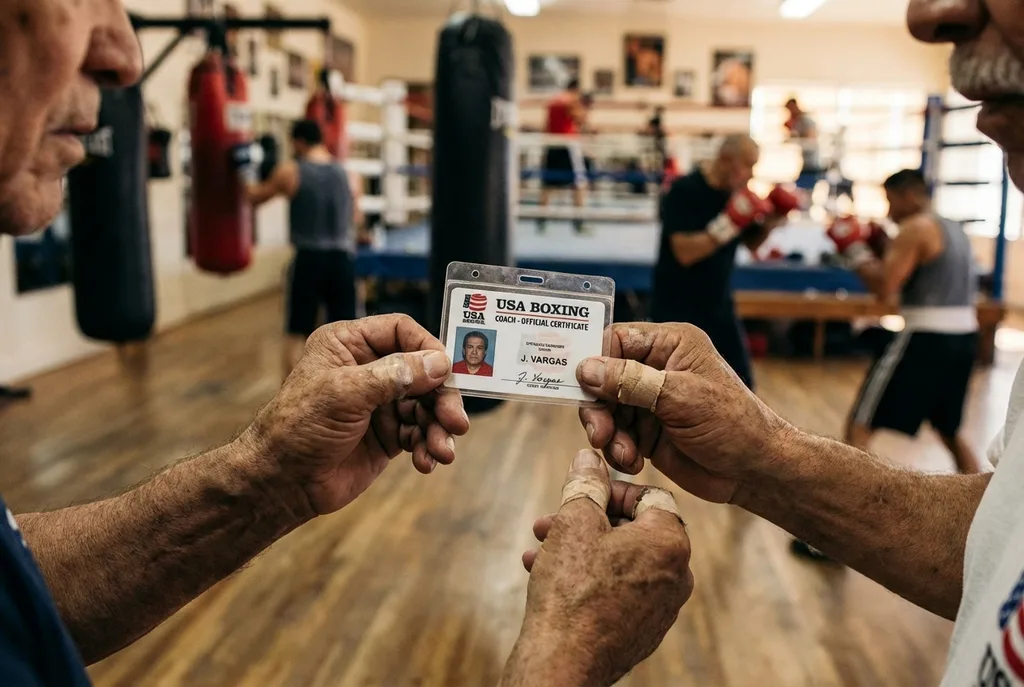
Affiliated boxing clubs are required by their governing body to ensure all coaches working with children hold valid enhanced DBS checks. Governing bodies - including the Amateur Boxing Alliance and England Boxing - require valid DBS clearance as a condition of a coaching licence, though the specific verification mechanism differs between organisations. Note that England Boxing and the ABA are separate bodies; check which one your club is affiliated with.
A club affiliated with the Amateur Boxing Alliance or England Boxing is bound by a safeguarding framework that includes DBS requirements, safeguarding training, and child welfare policies. This is not optional - it is a condition of affiliation.
An unaffiliated club has no governing body to impose these requirements. That does not mean the coaches are not checked, but it does mean there is no external body verifying compliance.
This is one of the most practical reasons to choose an affiliated club over an independent one, particularly for children.
How to Verify a Coach's DBS
There are two ways to verify a DBS check: asking directly and using the DBS Update Service.
Asking directly
Any coach working with children at a legitimate club should be able to show you their DBS certificate on request. You cannot run your own search on someone else's certificate number - only the certificate holder can do that, or the umbrella body that processed the check.
What you can do is ask the club's Welfare Officer or Club Manager:
- Does every coach working with children hold a current enhanced DBS?
- When was the most recent check carried out?
- Who processes the club's DBS checks? (This should be the governing body's umbrella body, not an unverified third party)
If you are met with defensiveness or vagueness, that is information.
The DBS Update Service
The Update Service allows DBS certificate holders to keep their certificate current and allows employers (including clubs) to run status checks online. If a coach has registered their certificate with the Update Service, the club can check whether the certificate is still current and whether any new information has emerged since it was issued.
You as a parent cannot access the Update Service directly. But a club that is properly administering its safeguarding should be doing status checks on coaches annually.
Ask the club: are your coaches' DBS certificates registered with the Update Service? If the answer is no, or if the question draws blank looks, the club is behind on best practice.
What DBS Does Not Tell You
A DBS check has limits that are worth understanding.
It only shows what is on record. A coach who has never been reported, charged, or convicted will have a clean certificate regardless of their behaviour. This is why the full safeguarding framework matters - not just the certificate itself.
DBS checks also go out of date. A check carried out three years ago may not reflect more recent information. The Update Service addresses this, but only if the certificate holder has registered.
It also does not tell you anything about coaching competence, appropriate behaviour with children, or how a club handles complaints. A clear DBS is necessary but not sufficient.
What to Look for Beyond the DBS
When you visit any boxing club with a child, the safeguarding picture is visible in how the club is run, not just in its paperwork.
Questions that reveal a club's culture:
- Is there always more than one adult present during children's sessions?
- Are changing facilities properly supervised?
- Are coaches prohibited from contacting children on personal social media or messaging apps?
- Is there a written safeguarding policy available to parents?
- Is there a named Welfare Officer, and do parents know how to contact them?
- Are parents welcome to watch sessions?
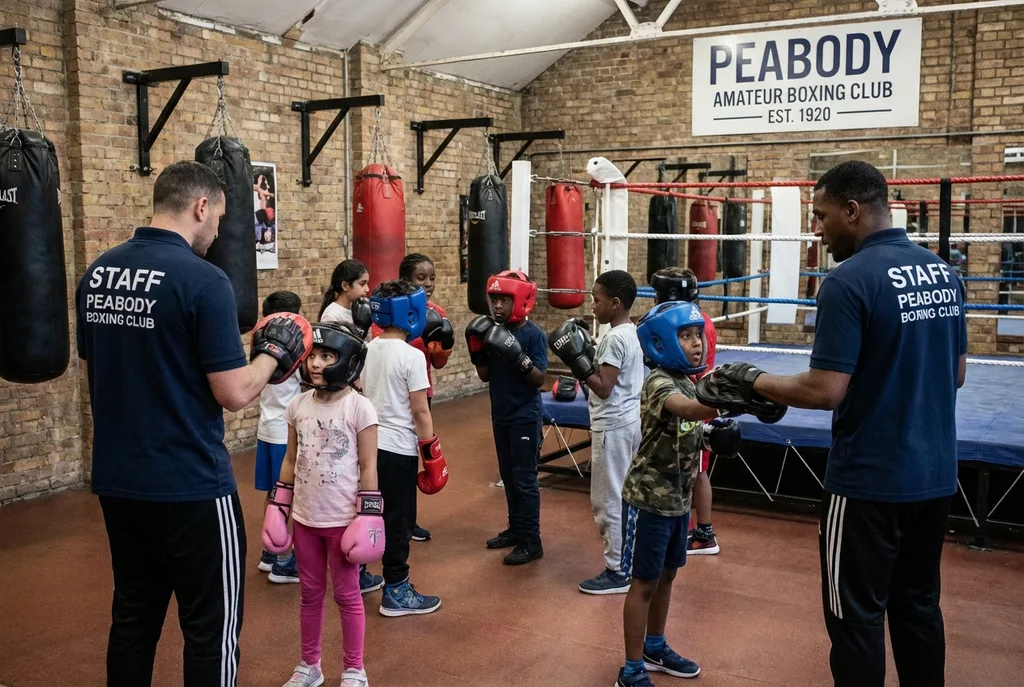
Legitimate clubs welcome these questions. They have answers prepared because they have thought about this. Clubs that resist parents watching, or that have coaches building one-on-one relationships with children outside the gym setting, exhibit behaviours that safeguarding frameworks specifically identify as risk factors.
At Honour and Glory
At Honour and Glory Boxing Club in Kidbrooke, SE3, our club is affiliated with the Amateur Boxing Alliance. Parents can ask direct questions about coaching checks, safeguarding arrangements and supervision before bringing a child to train.
Parents are always welcome to watch sessions. Our named Welfare Officer is Anton Pattenden, reachable at info@honourandglory.co.uk or on WhatsApp. Full details are on our safeguarding page. If you have any questions before bringing your child to their first trial session, contact us directly at info@honourandglory.co.uk.
The Broader Picture
The CPSU's 2024/25 data on safeguarding in sport records that Childline delivered 70 counselling sessions involving concerns in sports settings. Most of these concerns arose in environments where safeguarding structures were absent or nominal.
The presence of a governing body, a real Welfare Officer, and a culture where parents can ask questions does not guarantee nothing bad will ever happen. But it dramatically reduces the conditions in which bad things are more likely to occur.
A DBS certificate is one part of that picture. It is the part you can verify. Start there.
H&G Team
Writer at Honour & Glory Boxing Club, a community boxing gym in Kidbrooke, South East London.
KEEP READING

Safeguarding in Boxing: What Parents Should Know
Every boxing club working with children in the UK should meet minimum safeguarding standards. Most parents do not know what those standards are or how to check them.
Questions to Ask a Kids Boxing Club
Most parents do not need a boxing education before choosing a club. They just need to ask the right questions and notice how the adults answer them.
What a Good Junior Boxing Club Feels Like
Parents usually know when a room feels right for their child. Here is what a good junior boxing club should actually feel like in practice.
Was this page helpful?
It takes one tap, and it genuinely helps.
Choose your next step
Turn this article into the right action
Some readers are ready to book. Some need the class route first. Pick the route that matches what you actually want.