How Boxing Teaches Children Emotional Regulation
There is a difference between suppressing anger and learning to use it. Most anger management approaches for children focus on suppression: count to ten, walk away, breathe deeply. These techniques have their place, but they share a fundamental problem. They treat intensity as something to eliminate rather than something to direct.
Boxing takes the opposite approach. It does not ask children to stop feeling intense. It teaches them to channel intensity into something precise and controlled. That distinction changes outcomes.
The Problem with Suppression
When a child is told to suppress anger, the physiological arousal does not go away. The cortisol is still elevated. The adrenaline is still circulating. The muscles are still tense. The child is simply asked to contain all of that internally.
Research from the American Psychological Association confirms that habitual anger suppression is associated with increased physiological stress, rumination, and eventual explosive outbursts. Suppression does not resolve anger. It stores it.
For neurodivergent children, particularly those with ADHD or sensory processing differences, suppression is even harder. Their nervous systems are already dysregulated. Asking them to add another layer of control on top of an already overwhelmed system often fails.
What Controlled Aggression Actually Means
In boxing, controlled aggression is a technical term. It means applying force with precision, timing, and purpose. A controlled punch is not a weak punch. It is a fast, accurate, properly structured punch that lands where it is intended to land.
The training process to develop controlled aggression involves:
- Learning to stay calm under pressure. When a training partner is coming forward, panic leads to wild swinging. Composure leads to clean counter-punching. The gym teaches this through repetition, not lectures.
- Distinguishing between intensity and chaos. Intensity means focused effort. Chaos means flailing. Boxing punishes chaos instantly. Children learn that their power comes from technique, not from emotional escalation.
- Recognising the physical signals. Children learn to feel when their heart rate rises, when their breathing changes, when their muscles tense. They learn these are signals to focus, not signals to panic.

A 2021 systematic review in Aggression and Violent Behavior found that training in structured martial arts lowers levels of anger and aggression. The mechanism is not catharsis (hitting things to "get it out"). The mechanism is skill development: the child builds actual cognitive and physical tools for managing arousal.
The Transfer Effect
The most important question for parents is: does emotional control in the gym transfer to life outside the gym?
The research says yes. A 2020 study in Preventive Medicine found that consistent participation in organised sport predicted lower subsequent behavioural problems in children. The effect was not just during the activity. It persisted across settings.
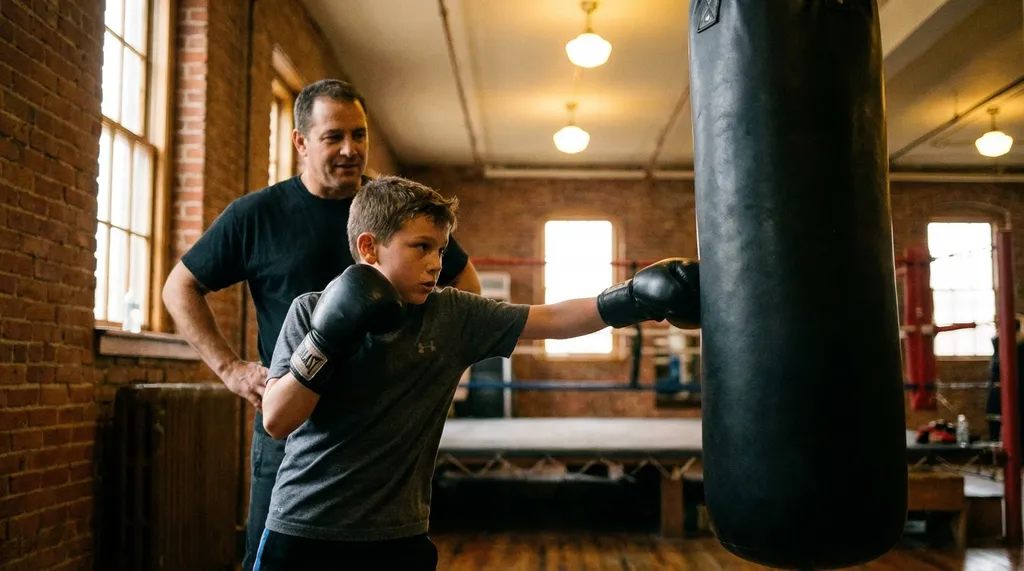
Boxing coaches see this regularly. A child who learns to stay composed when tired and under pressure during pad work develops the same capacity to stay composed when frustrated at school or in conflict at home. The skill is the same. The context changes, but the neural pathways do not.
The IOC consensus statement on youth athletic development emphasises that structured sport participation in childhood supports executive function development, including the inhibitory control that emotional regulation depends on.
Why Boxing Specifically
Parents sometimes ask why boxing rather than football, swimming, or gymnastics. The answer is about the specific type of cognitive demand.
Swimming is repetitive. Football is chaotic. Gymnastics is sequential. Boxing is reactive and requires constant real-time decision-making under physical stress.
- Listening to verbal instructions (combination calls)
- Processing visual information (where the pads are, whether they are moving)
- Executing motor patterns (correct technique for each punch)
- Managing physical fatigue (breathing, staying balanced)
- Regulating emotional state (staying calm when tired and frustrated)
This multi-channel cognitive load is what builds emotional regulation capacity. The child is practising regulation under genuine stress, not in a calm therapy room where the stakes are theoretical.

The Coach Relationship
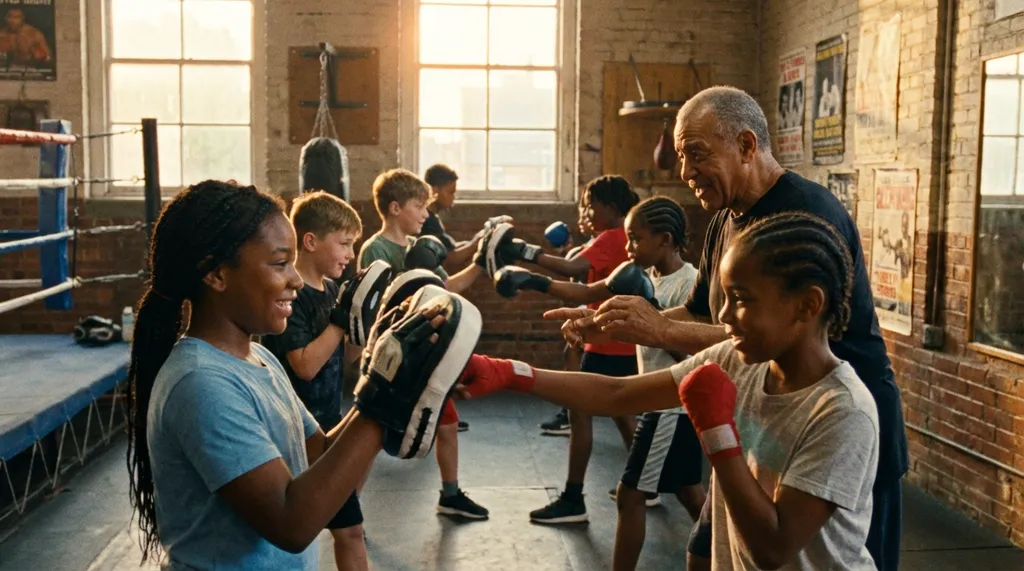
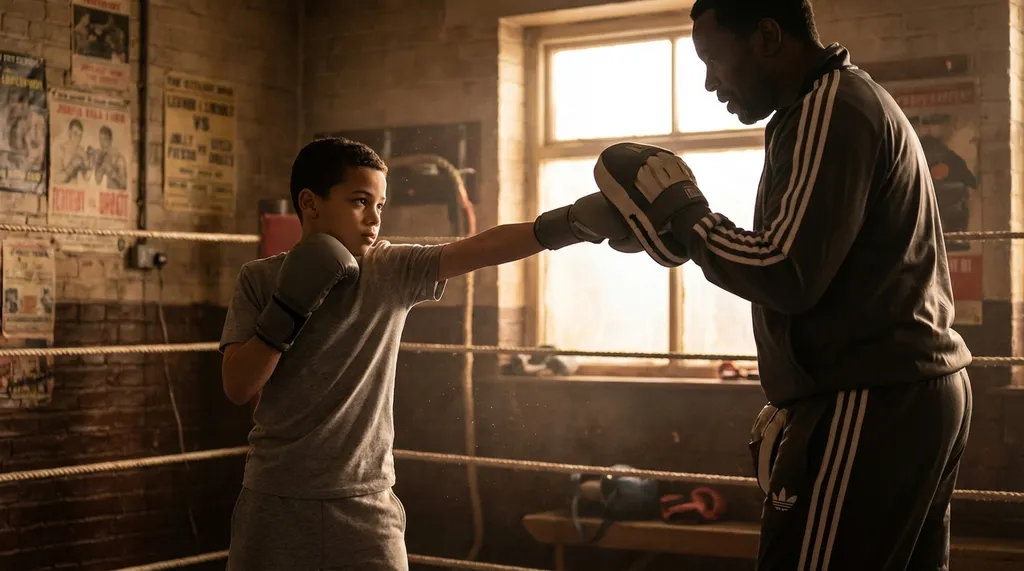
For many children who struggle with emotional regulation, the relationship with a consistent authority figure matters enormously. A boxing coach is not a teacher, a parent, or a therapist. The coach occupies a unique position: someone the child respects because the coach can do something the child wants to learn to do.
This is different from institutional authority. A child who resists every instruction from a teacher will follow a boxing coach's guidance without resistance because the context is different. The coach is not trying to control the child's behaviour for the school's benefit. The coach is teaching the child a skill the child has chosen to learn.
Over weeks and months, the relationship with a consistent coach provides an anchor. The child learns that this adult shows up every session, holds the same standards, and treats them with the same respect regardless of what happened at school that day. For children whose lives are chaotic, this consistency is stabilising.
What Parents Should Know
Boxing is not therapy. Coaches are not therapists. If a child has a clinical condition that requires professional support, boxing supplements that support. It does not replace it.
What boxing provides is a regular, structured, physically demanding environment where emotional regulation is not discussed as an abstract concept but practised as a physical skill. Children who train consistently develop measurably better impulse control, frustration tolerance, and emotional composure.
At Honour and Glory, classes for children start from age 5. Our coaches are DBS checked, experienced with neurodivergent children, and trained to create an environment where every child can succeed at their own pace. Sessions cost from £5 with no contracts.
If your child struggles with emotional regulation and you are looking for something more than talk-based approaches, book a free trial. Let them experience what controlled intensity feels like. Most children know within one session whether it is right for them.
H&G Team
Writer at Honour & Glory Boxing Club, a community boxing gym in Kidbrooke, South East London.
Rate this article
Your feedback helps us write better content
Got questions about what you just read?
ASK OUR AI ASSISTANT ✨MORE LIKE THIS
WANT TO JOIN US?
Book a free trial session and see what we're all about.
Claim a Free Trial