Core Exercises for Boxing: What Actually Builds Punching Power
Every new boxer eventually hears the same thing: work your core. Most of them spend the next few weeks grinding out sit-ups and calling it done. Then they wonder why their punching power stays the same.
The reason is that most people misunderstand what "core" means in boxing. It is not just your abs. It is every muscle between your hips and your chest - the obliques, the transverse abdominis, the lower back, the hip flexors. Together they form the link between your legs, where boxing power starts, and your arms, where it finishes. If that link is weak or slow, force gets lost on the way through.
A six-week core strength training programme has been shown in research to increase rear-hand punch force by around 24 percent in trained boxers. That is not a marginal gain. That is the difference between a shot that stings and one that genuinely hurts.
But only if you are doing the right exercises. Here is what actually works.
Why core training matters more than you think
Boxing punches do not start at the shoulder. Watch any decent coach slow-down footage and you can see the sequence: the back foot drives into the floor, the hips rotate, the torso follows, and the arm extends last. The power generated by your legs has to travel through your core before it gets anywhere near your fist.
A weak core means energy bleeds out in the middle. The punch arrives with less behind it. A strong core acts as a conduit - tight, controlled, transferring force without losing it.
There is a second role too. Taking shots. Any boxer who has been hit clean in the body knows what a poorly braced core feels like. Developing the deep muscles - particularly the transverse abdominis and the obliques - means you absorb impact rather than fold under it.
And third: balance and recovery. After you throw, you need to be in position to defend. Core stability determines how fast and cleanly you reset. Boxers who drift after combinations almost always have a core that is not doing its job.
The exercises that actually transfer
Plank variations
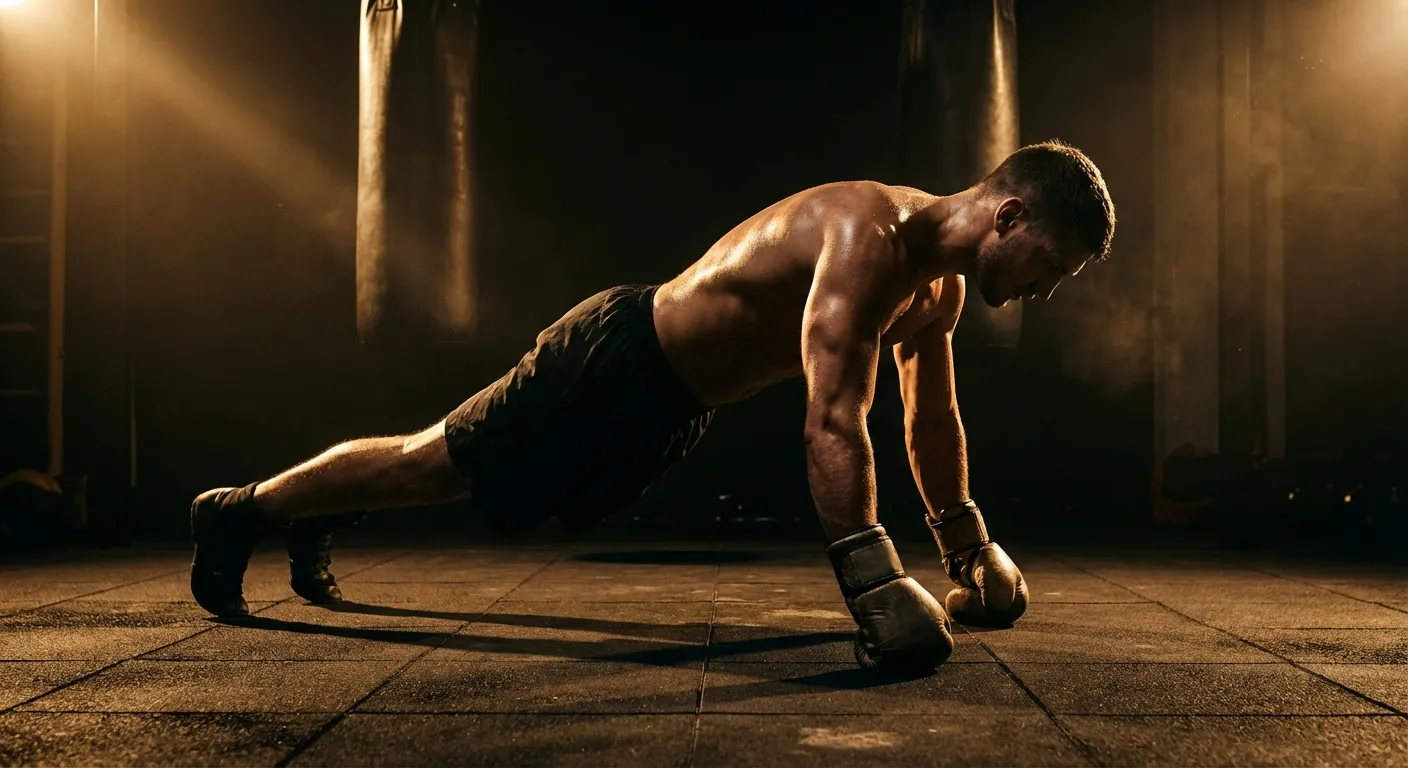
The standard plank is underrated because people make it too easy. Hold it for 60 seconds with your hips down and your glutes braced, then add difficulty gradually - side planks for the obliques, plank shoulder taps for anti-rotation stability, RKC planks where you actively squeeze every muscle in your body.
These are not glamorous. They are also among the most directly applicable exercises a boxer can do. The isometric tension they develop is exactly what you need when you are in a clinch, absorbing a body shot, or holding position at the end of a hard round.
Ab wheel rollouts
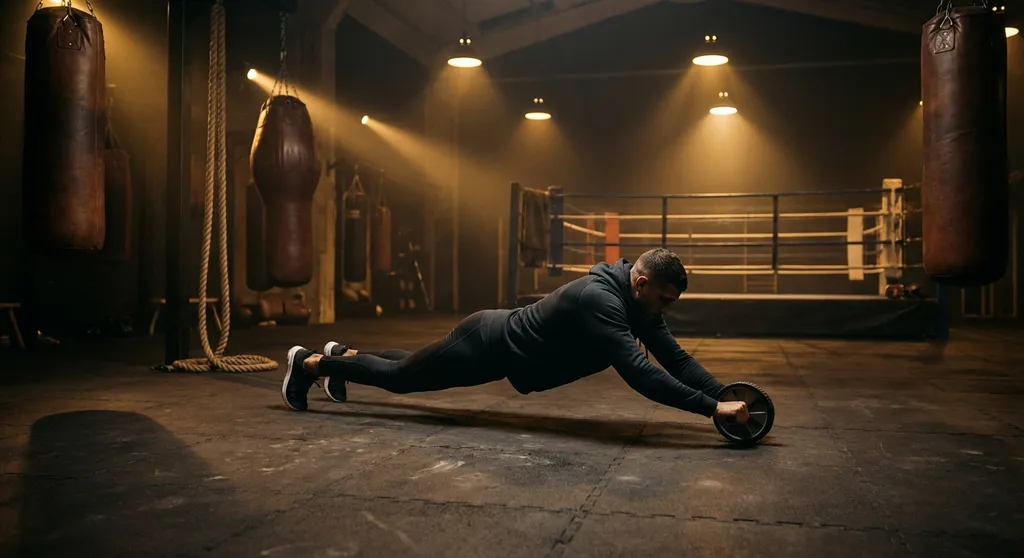
If you have an ab wheel sitting in a corner somewhere, get it out. If you do not, buy one - they are inexpensive and they target the deep core muscles, specifically the transverse abdominis, better than almost anything else.
Start from your knees, roll out slowly, and resist the urge to let your back arch. The eccentric phase as you return is where a lot of the work happens. Done consistently, rollouts build the kind of controlled core tension that makes combinations flow rather than flail.
Hanging leg raises
These address the lower abdominals and hip flexors, which often get neglected in standard gym core routines. Hang from a pull-up bar, keep your legs straight, and raise them to parallel or beyond. The key is not swinging - use a slow, controlled movement and lower all the way down.
The reason this matters for boxing is hip control. Clean footwork and quick pivots require the lower core to fire efficiently. Most people do not train this specifically, and it shows in their movement.
Russian twists
Sit on the floor with your knees bent and your feet slightly elevated, hold a light weight at chest height, and rotate side to side with control. This builds the rotational power that drives hooks and uppercuts.
Do not go heavy and fast. Go moderate and precise. The goal is to train the obliques through their full range of motion, not to heave a kettlebell from side to side and hope for the best. A few sets of 15 to 20 reps done slowly are worth more than twice as many done sloppily.
Dead bugs
Lie on your back, arms pointing at the ceiling, knees bent at 90 degrees. Slowly lower your right arm and left leg toward the floor, keeping your lower back pressed flat, then return and repeat on the other side.
It sounds easy. Done properly, it is not. Dead bugs train the core to stabilise the spine while the limbs move in different directions - which is precisely what happens when you throw a combination. The cross-body connection this builds directly supports cleaner, more powerful punching.
Medicine ball work
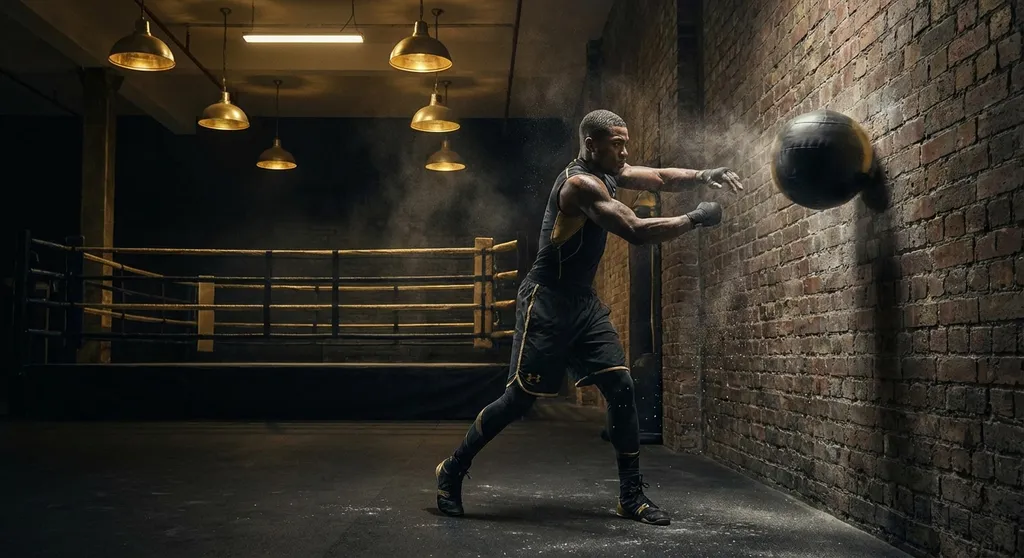
Rotational throws against a wall, overhead slams, and partner chest passes all add an explosive element that static exercises cannot replicate. If you have access to a medicine ball - which most boxing gyms do - get it into your warm-up.
Rotational throws against a solid wall are particularly useful. Stand at 90 degrees to the wall, hold the ball at hip height, rotate and throw explosively, catch the rebound. Both sides, 10 reps each. Done before pad work, these warm up the exact muscle patterns you are about to use.
What to stop doing
The sit-up is not useless. But it is overused, often done with poor form, and it places repeated load on the spine in large volumes. It also trains the rectus abdominis - the visible six-pack muscle - without doing much for the deeper stabilisers that boxing actually demands.
The same goes for crunches done in high volume. A few are fine as part of a varied routine. A hundred a day is not a core programme - it is a way to feel like you are working hard without making much progress.
Stop chasing fatigue and start chasing quality. Ten clean hanging leg raises are worth more than fifty sloppy ones.
A simple weekly structure
You do not need a separate hour for core work. Most of this can be done in 15 to 20 minutes at the end of a session, three times a week.
- Plank: 3 sets of 60 seconds
- Side plank: 2 sets of 45 seconds each side
- Dead bugs: 3 sets of 10 reps each side
- Ab wheel rollouts: 3 sets of 8 to 10 reps
- Medicine ball rotational throws: 3 sets of 10 each side
- Russian twists: 3 sets of 20 reps at moderate weight
- Hanging leg raises: 3 sets of 12 reps
- RKC plank: 2 sets of 30 seconds
- Ab wheel rollouts: 3 sets of 8 reps
- Side plank with rotation: 2 sets of 10 each side
- Dead bugs: 3 sets of 10 each side
- Medicine ball overhead slams: 3 sets of 10 reps
Rotate through these over the week. You will notice the difference within a month or so - not dramatically at first, but in the way your combinations feel more connected, your balance improves after exchanges, and your body takes shots slightly better.
The core is trained in the gym too
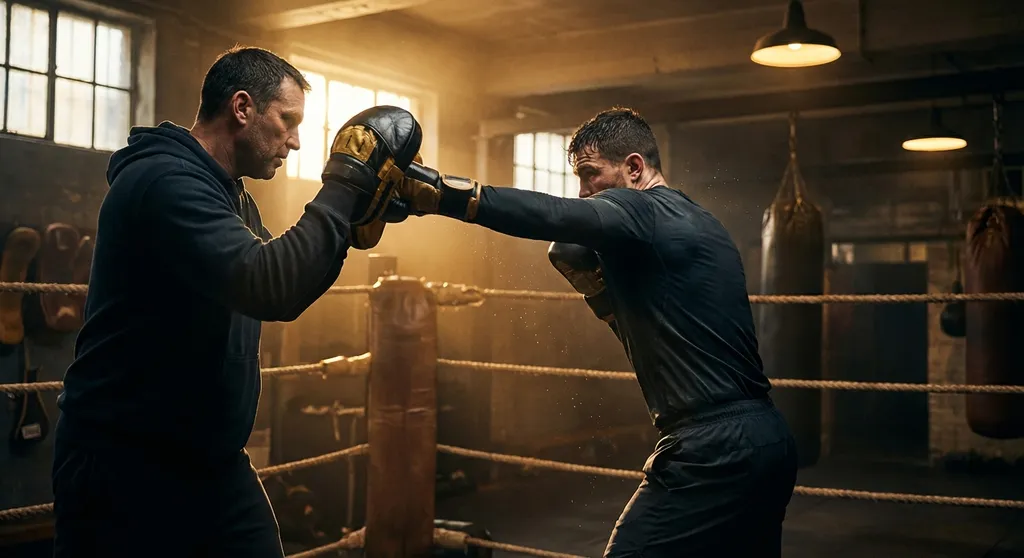
One thing worth saying: a lot of core strength is built during boxing training itself, not separate from it. Throwing combinations on the heavy bag for three rounds works your obliques and transverse abdominis hard. Pad work with a coach who makes you rotate and commit loads the core consistently. Skipping, footwork drills, sparring - all of it contributes.
The supplemental exercises above are exactly that - supplemental. They address gaps that boxing alone does not fully cover, particularly anti-rotation stability and controlled lower abdominal strength. They work best when they sit alongside regular gym training, not as a substitute for it.
At H&G in Kidbrooke, conditioning work is built into sessions - coaches do not leave you to figure this out on your own. But if you want to do extra between sessions, the exercises above are a solid place to start.
The bottom line
Core exercises for boxing are not about aesthetics. Nobody in the ring is particularly worried about looking good under the lights. It is about punching harder, staying balanced, absorbing more, and resetting faster. The exercises that do that well are the ones that train rotation, stability, and controlled movement - not the ones that simply make your abs burn the quickest.
Spend three months doing the exercises in this article properly and you will be surprised how much changes - without altering a single thing about your technique.
And if you want to learn how to turn that core strength into actual ring ability, come down to H&G and find out what good coaching looks like.
H&G Team
Writer at Honour & Glory Boxing Club, a community boxing gym in Kidbrooke, South East London.
Was this page helpful?
It takes one tap, and it genuinely helps.
Choose your next step
Turn this article into the right action
Some readers are ready to book. Some need the class route first. Pick the route that matches what you actually want.