
Walk into any boxing gym in the world and you will hear the same sound: the rhythmic slap of jump ropes hitting the floor. From beginners to world champions, everyone skips.
This is not tradition for tradition's sake. Skipping does things for boxers that almost no other exercise can match. Here is why the humble jump rope remains the most important piece of equipment in boxing, and how to use it properly.
Why Boxers Skip
It Builds Boxing-Specific Fitness
Running builds endurance. Skipping builds boxing endurance. The constant light bouncing on your toes mimics the movement pattern in the ring. Your calves, ankles, and feet adapt to staying light and reactive.
After months of consistent skipping, staying on your toes in the ring feels natural instead of exhausting.
It Develops Coordination
Your hands and feet have to work together when you skip. This coordination transfers directly to boxing, where you are constantly coordinating punches with footwork.
Beginners who struggle with coordination often find that regular skipping accelerates their progress with actual boxing skills.
It Improves Timing and Rhythm
Boxing is all about rhythm - finding yours, disrupting your opponent's. The steady cadence of skipping trains your internal sense of timing.
Good boxers can hear the rhythm of a fight. Skipping helps develop that ear.
It is Efficient Cardio
Ten minutes of skipping at moderate intensity burns roughly the same calories as thirty minutes of jogging. It spikes your heart rate quickly and maintains it.
For boxers who need to make weight or stay lean, skipping offers maximum results for minimum time.
It Works as a Warm-Up and Cool-Down
Three rounds of light skipping gets blood flowing to your whole body without exhausting you for the main workout. A few minutes of easy skipping post-workout helps your body transition to rest.
It is Portable
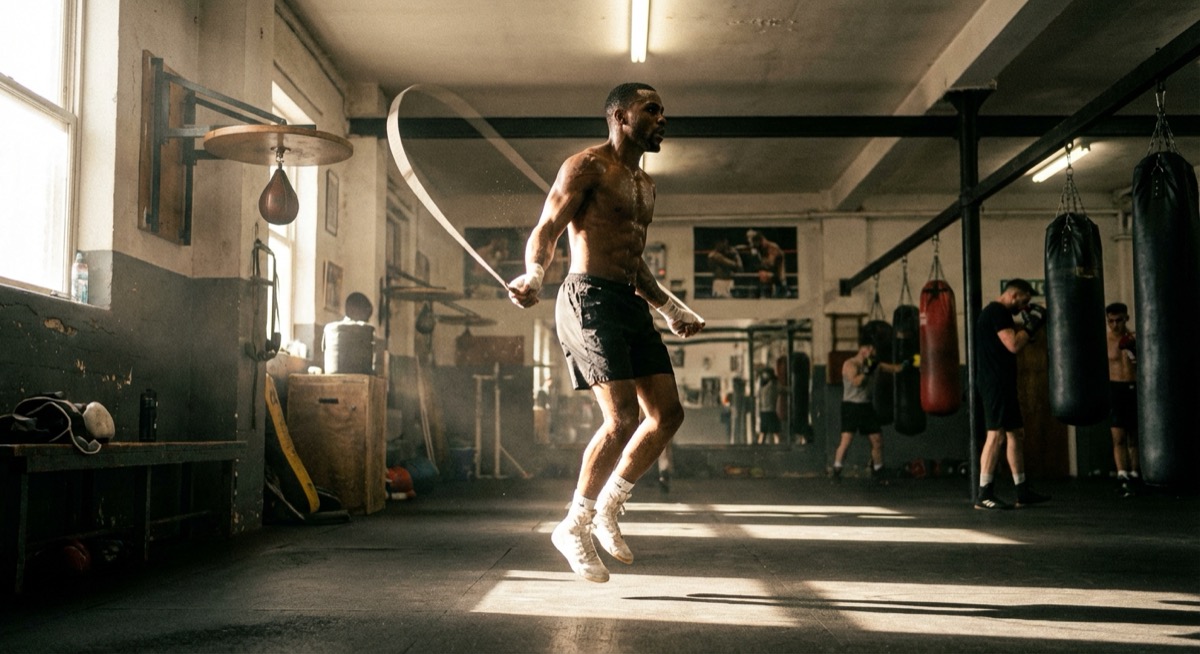
You can throw a rope in your bag and train anywhere. Hotel room, park, back garden - anywhere with a bit of ceiling height becomes a gym.
How to Skip Properly
The Basic Bounce
Start with both feet together, jumping just high enough to clear the rope - maybe an inch off the ground. Land on the balls of your feet, knees slightly bent.
Most beginners jump way too high and land too hard. You want small, quick bounces. If you are making loud slapping sounds when you land, you are jumping too high.
Wrist Rotation
The rope moves from your wrists, not your arms. Keep your elbows relatively still and close to your body. The rotation comes from a quick flick of the wrists.
Large arm movements waste energy and make the rope inconsistent.
Body Position
Stand tall with a slight forward lean. Core engaged but not rigid. Shoulders relaxed. Eyes looking forward, not down at your feet.
Breathing
Breathe naturally. Do not hold your breath - that'll tire you out fast. Find a breathing rhythm that matches your bounce rhythm.
Skipping Progressions
Level 1: Basic Bounce (Weeks 1-2)
Just learn to keep the rope going continuously. Do not worry about anything fancy. If you can skip for 3 minutes without tripping more than a few times, you are ready to progress (source).
Level 2: Alternate Feet (Weeks 3-4)
Instead of jumping with both feet, step over the rope one foot at a time. Left foot, right foot, left foot - like running in place but lifting your knees just enough to clear the rope.
This is more athletic and burns more energy than the basic bounce.
Level 3: High Knees (Weeks 5-6)
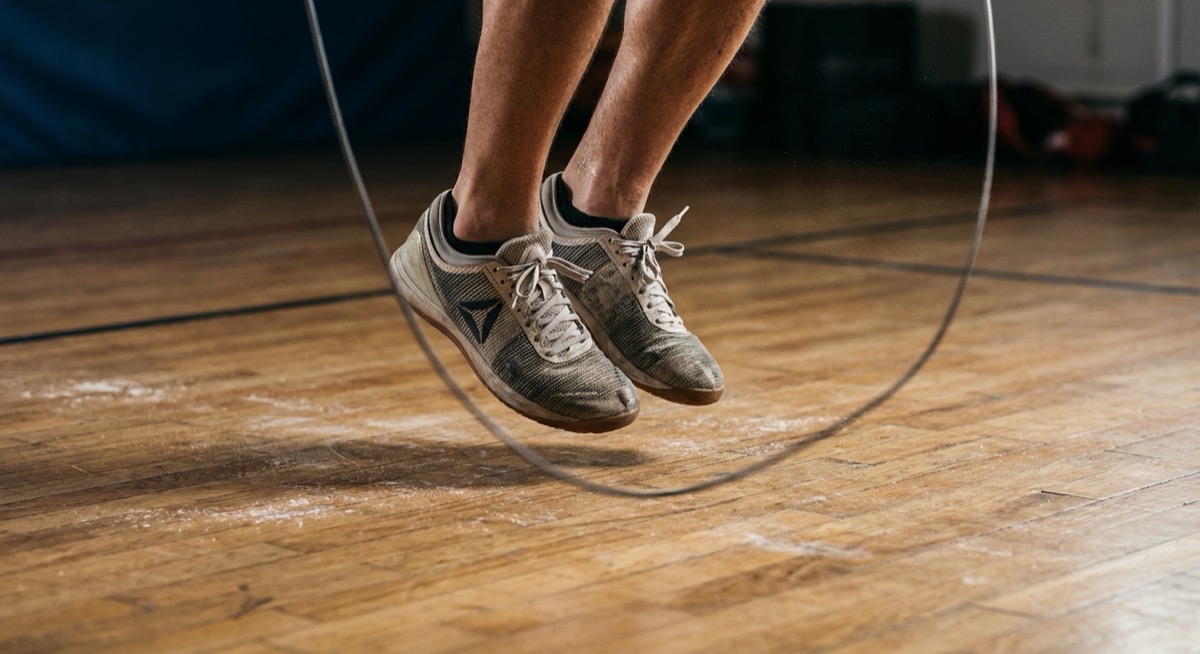
Same as alternate feet but bringing your knees higher - up to hip level. This intensifies the cardio demand and builds hip flexor strength.
Level 4: Side to Side (Weeks 7-8)
Jump with both feet but land slightly to the left, then the right. You are covering maybe 6 inches side to side. Mimics the lateral movement in boxing (source).
Level 5: Front to Back (Weeks 9-10)
Same concept but jumping forward and backward. Trains the forward-and-back movement patterns.
Level 6: Boxer Skip (Ongoing)
This is what you see pros doing - a shuffle where you shift weight from foot to foot while throwing in occasional high knees, side steps, and rhythm changes. It looks effortless when done right.
The boxer skip takes months to get smooth. Do not rush it.
Advanced: Double-Unders
The rope passes under your feet twice per jump. This requires a slightly higher jump and much faster wrist rotation. It is extremely demanding cardio-wise.
Most recreational boxers never need double-unders. They are useful but not necessary.
A Basic Skipping Routine
Here is a simple structure you can follow:
- Round 1. Basic bounce, easy pace. Warming up. Find your rhythm.
- Round 2. Alternate feet. Slightly faster pace.
- Round 3. Mixed - basic bounce, alternate feet, high knees, whatever feels good. Start pushing the intensity.
- Round 4 (optional). Challenge round. High intensity, double-unders if you can, try to maintain a fast pace throughout.
Three to four rounds is enough for most training sessions. If skipping is your main cardio work for the day, you might go 6-10 rounds.
Common Mistakes
Jumping Too High
You only need to clear a thin rope. Jumping high wastes energy and stresses your joints. Stay low and quick.
Rope Too Long or Short
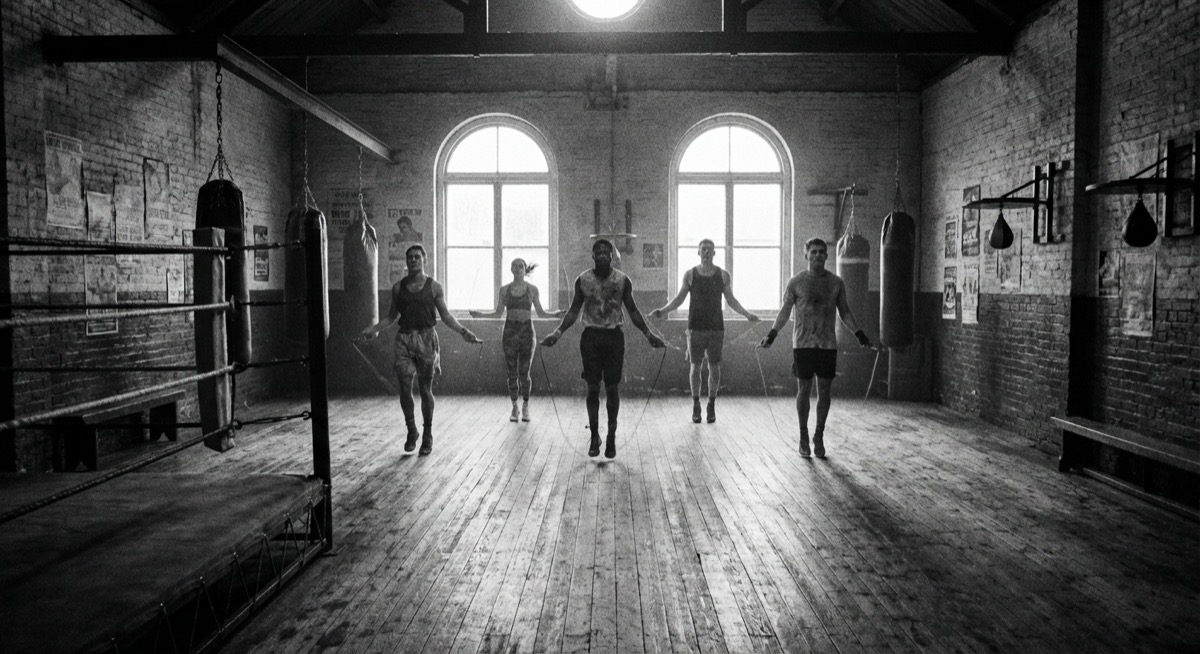
When you stand on the middle of the rope, the handles should reach your armpits (for beginners) or chest level (for experienced skippers). Too long and it drags, too short and you catch your feet constantly.
Looking Down
Your body follows your head. Looking down rounds your shoulders and throws off your balance. Eyes forward.
Skipping on Concrete
Hard surfaces destroy your joints over time. Skip on wood, rubber mats, or a thin layer of carpet. Grass is fine if it is flat.
Going Too Hard Too Soon
Your calves and Achilles tendons need time to adapt. Start with shorter sessions and build up. Pushing too hard leads to shin splints and tendon problems.
Giving Up Too Early
Everyone trips constantly when learning. It takes 2-4 weeks of consistent practice before skipping feels natural. Do not quit because you are tripping - that is normal.
Getting the Right Rope
- Skip beaded or cloth ropes. They are too slow and do not give good feedback.
- Get a speed rope with plastic or PVC cord. These cut through the air cleanly and last forever.
- Ball bearing handles help if you are going to do a lot of skipping. They rotate more smoothly than basic bushings.
- Weighted ropes exist but are not necessary for most boxers. They build shoulder endurance but slow down your rhythm.
A decent speed rope costs £10-15 and lasts for years. It is the best value piece of training equipment you will ever buy.
When to Skip
- Before training. 3 rounds as a warm-up is standard at most boxing gyms. Gets you sweating and mentally present.
- During training. Some programs include skipping rounds between bag rounds or pad rounds. Keeps the heart rate up.
- As standalone cardio. 20-30 minutes of skipping is a complete cardio workout. Great for days when you cannot get to the gym.
- After training. Light skipping helps cool down and keeps blood moving through tired muscles.
Just Start
You do not need perfect technique to begin skipping. Grab a rope and start bouncing. You will trip, you will mess up, you will look uncoordinated. Everyone does at first.
Within a few weeks, you will wonder how you ever trained without it.
At Honour & Glory, we skip every session. It is built into our warm-up structure, and coaches will help you improve your technique over time. You will go from tripping constantly to skipping smoothly faster than you'd expect.
H&G Team
Writer at Honour & Glory Boxing Club, a community boxing gym in Kidbrooke, South East London.
KEEP READING

Is Boxing Better Than Running for Fitness?
Running and boxing are both viable fitness activities. They produce different results and suit different people. Here is the honest comparison with the evidence.
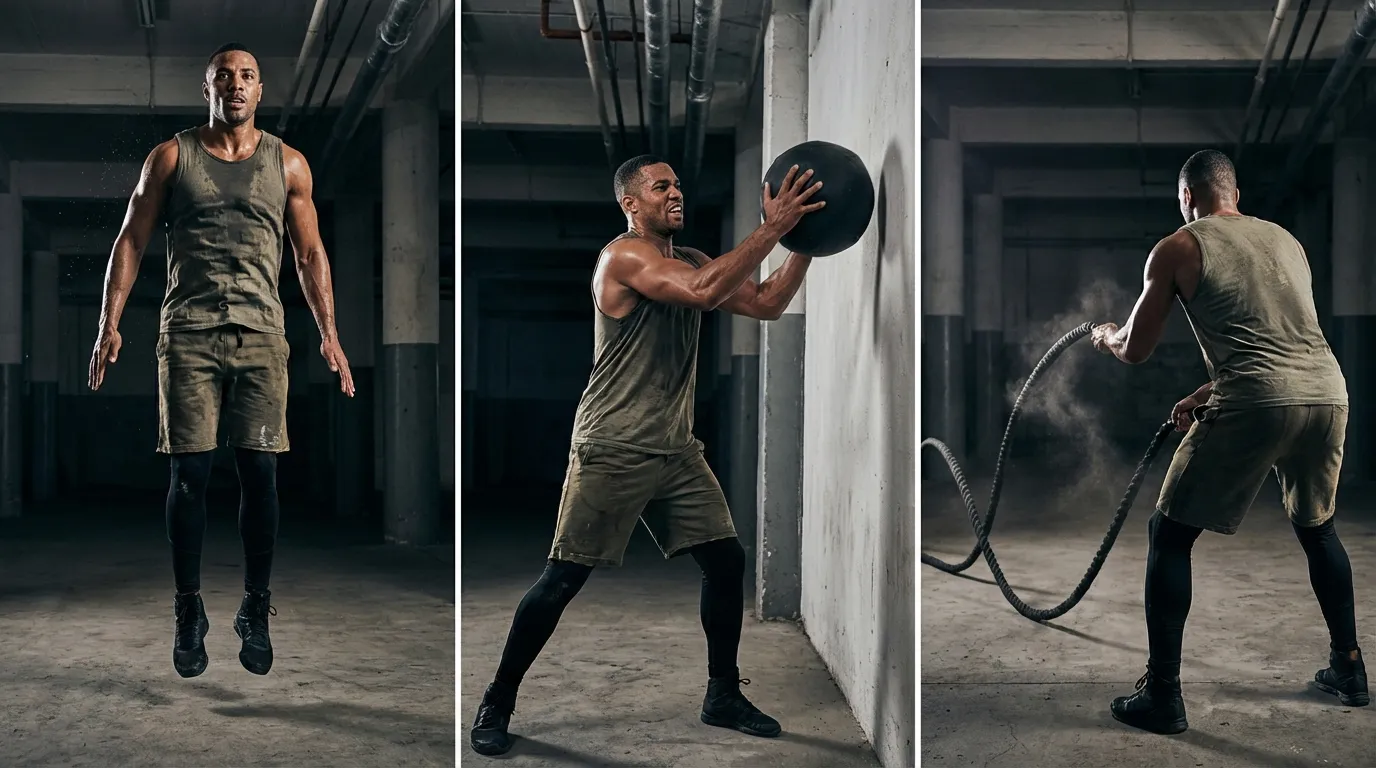
Boxing Conditioning Workouts
Boxing demands a unique type of fitness. Learn how to build the conditioning that keeps you dangerous when others are fading.
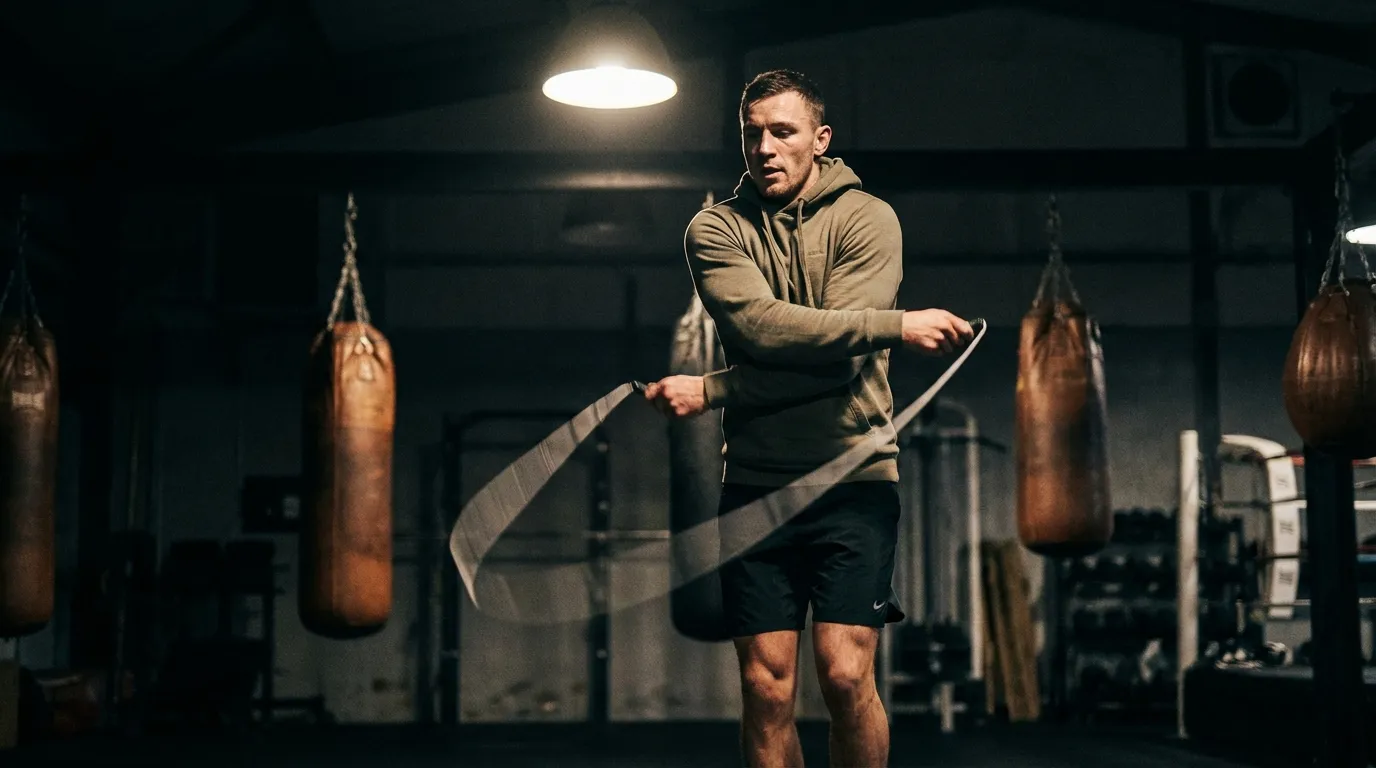
Skipping Rope for Boxing - The Complete Guide
Master skipping rope for boxing with this complete guide. Benefits, techniques, workout routines, and tips to improve your footwork and conditioning.
Was this page helpful?
It takes one tap, and it genuinely helps.
Choose your next step
Turn this article into the right action
Some readers are ready to book. Some need the class route first. Pick the route that matches what you actually want.