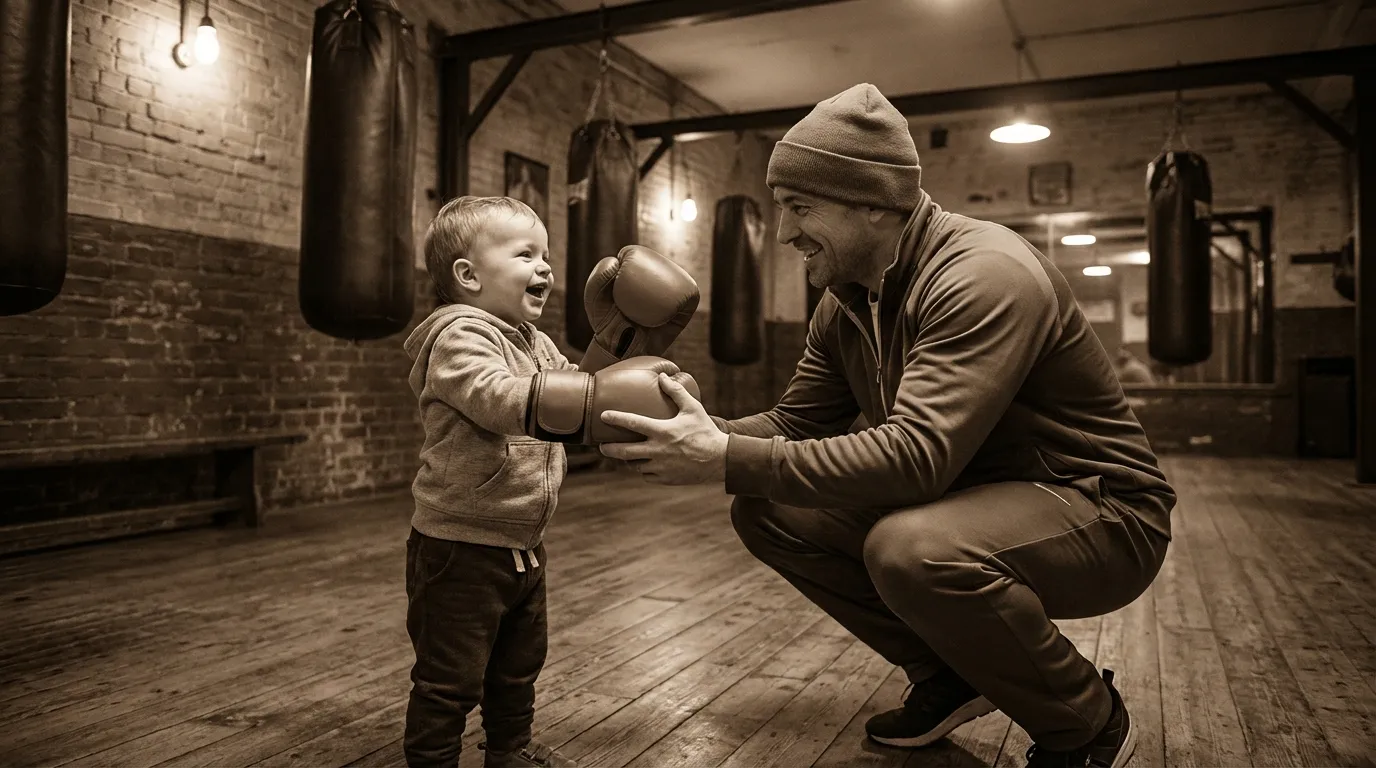
The short answer: at Honour and Glory, children can start group junior boxing from age 7.
That does not mean every seven-year-old is ready in exactly the same way. It means age 7 is the youngest point where we think a structured group junior boxing class usually makes sense: enough listening, enough coordination, enough confidence to follow a coach, and enough maturity to train safely around other children.
If you want the practical route, start with our kids boxing classes, check the Junior Recreational class, or book a free trial session. If your child is older and wants the competition pathway, Junior Competitive starts from age 10.
For safeguarding context, parents should also understand what good junior sport expects. Honour and Glory is affiliated with the Amateur Boxing Alliance, which publishes safeguarding documents for affiliated clubs. The NSPCC guidance on sports clubs and activities is also useful for parents choosing any children's sport.
The Direct Answer: Age 7 for Group Junior Boxing
Honour and Glory takes new junior members from age 7.
Our normal first step is Junior Recreational, which covers ages 7-16. That sounds broad on paper, so the coaching has to be sensible in practice. A seven-year-old and a fifteen-year-old should not be coached as if they are the same person.
The class gives younger children a structured introduction: movement, coordination, listening, basic footwork, simple punches, bag work, pad work, and gym discipline. Older juniors can handle more detail: combinations, defensive movement, conditioning, longer rounds, and a clearer technical progression.
The common thread is that Junior Recreational is not a fight-preparation class. It is where most children learn to box properly without being pushed toward competition.
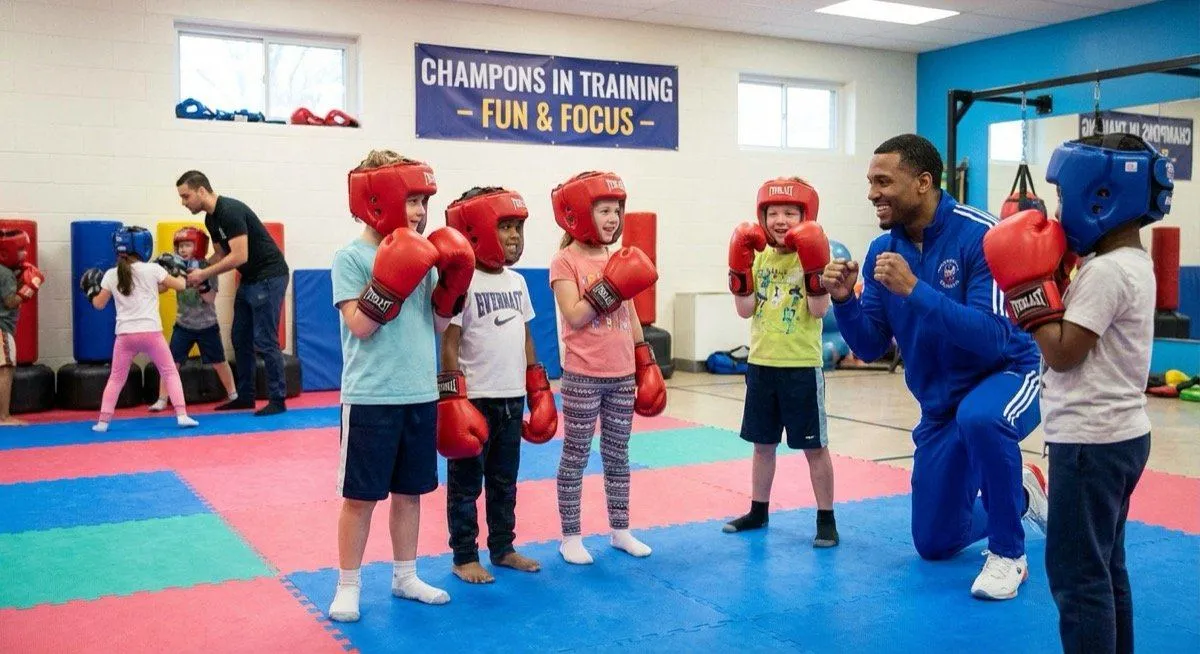
Why We Do Not Start New Group Members at 5 or 6
Some children aged 5 or 6 are physically confident. Some can follow instructions well. Some are desperate to copy an older sibling.
That does not automatically make a group boxing class the right setting.
At that age, the issue is rarely enthusiasm. It is usually attention span, body awareness, emotional regulation, and safety around other children. A younger child might enjoy movement games, skipping practice, balance drills, or general coordination work. That is useful preparation. But it is not the same as being ready for a proper junior boxing session.
We would rather be honest with parents than sell a class too early. If a child is not ready yet, waiting six months can make the first experience much better.
What Younger Children Actually Do
For children at the younger end of Junior Recreational, good boxing coaching should look different from adult boxing.
The session should still be real boxing, not childcare with gloves. But the emphasis is different for younger children: variety, clear instructions, short drills, and quick feedback.
A typical younger junior will work on:
- stance and balance
- basic footwork
- simple jab and cross mechanics
- coordination drills
- bag or pad work with close supervision
- listening and turn-taking
- fitness through games and short challenges
The aim is not to create a mini fighter. The aim is to build confidence, coordination, respect for the gym, and a positive relationship with training.
No child needs to spar to get those benefits.
What Changes Around Age 10
Around age 10, many children can absorb more technical detail.
They can usually handle longer explanations, more repetition, and a clearer link between practice and improvement. This is when combinations start to make more sense. Defence becomes less abstract. Footwork can be developed with more precision. Conditioning can be pushed slightly harder without turning the session into punishment.
This is also the age where the competition pathway becomes more relevant for the right child.
At Honour and Glory, Junior Competitive is for ages 10-16. It is not the automatic next step for every child. It is for young boxers who want to take the sport more seriously, train consistently, and work toward the competition pathway under coach supervision.
A child can be 10, 12, 14 or 16 and still be best placed in Junior Recreational. Age opens the door. Readiness decides whether they should walk through it.
Does My Child Have to Compete?
No.
This is one of the biggest misconceptions parents have about boxing. Many children train for years without competing. They still get fitter, more confident, more coordinated, and more disciplined.
Competition is there for children who want it and who the coaches believe are ready for it. It is not a default expectation.
Parents should be wary of any club that makes competition sound inevitable for every child. Junior boxing works best when the child develops first and the pathway follows naturally.
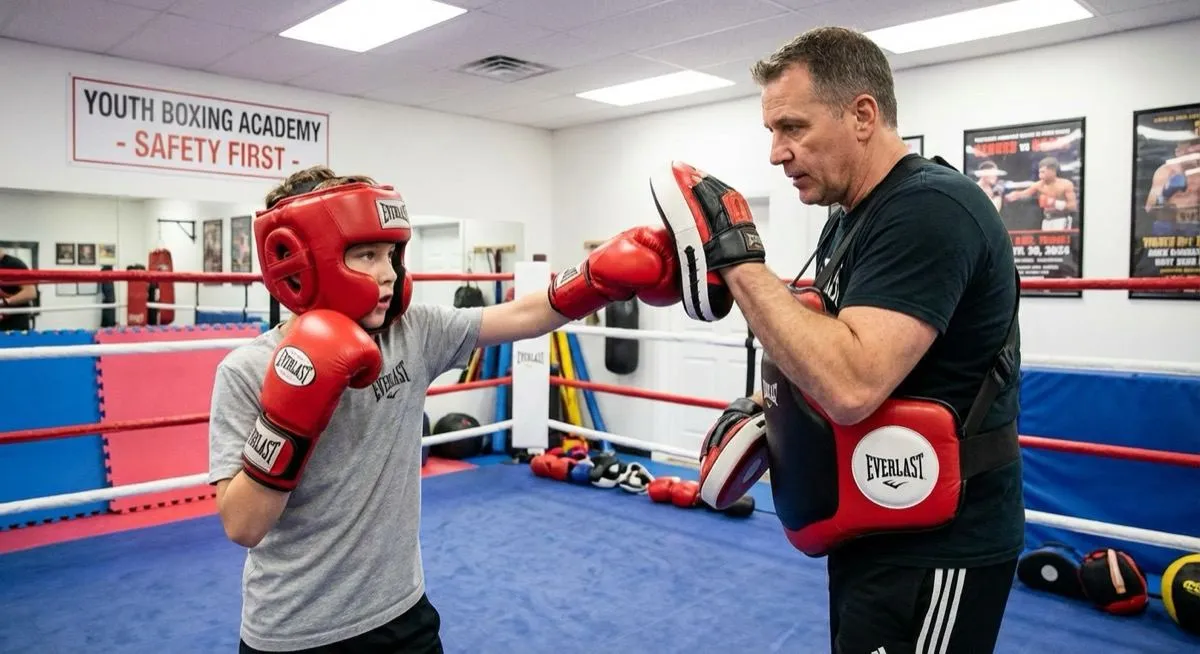
Is Sparring Part of the First Stage?
No.
Junior Recreational is not built around sparring. Children learn boxing through movement, bags, pads, shadow boxing, partner drills, technical games, and controlled coaching.
Sparring is a separate progression. It needs maturity, control, trust, protective equipment, appropriate matching, and a coach who is willing to stop things quickly.
For many children, sparring never becomes necessary. If the goal is fitness, confidence, focus, discipline and coordination, non-contact boxing training is enough.
If your child eventually wants to compete, the coaches will explain what changes, what is expected, and whether they are ready. That conversation should never feel rushed.
How to Tell If Your Child Is Ready
Age matters, but readiness matters more.
Your child is probably ready to try boxing if they can:
- follow simple instructions from an adult who is not their parent
- listen in a group setting
- take turns without constant correction
- handle small mistakes without falling apart
- move around safely near other children
- show interest in the activity themselves
- accept basic coaching and feedback
They do not need to be naturally sporty. They do not need to be confident already. They do not need to know anything about boxing.
In fact, many children who struggle with team sports do well in boxing because progress is individual. They are not waiting to be picked, compared by position, or blamed for a team result. They get a coach, a task, and a way to improve.
What If My Child Is Nervous?
Nervous is normal.
A good junior coach should know how to settle a child in. That usually means keeping the first session simple, pairing them sensibly, giving clear instructions, and making sure they get one early win.
For some children, the first victory is not throwing a perfect jab. It is walking into the gym, joining the warm-up, or finishing the session after being anxious at the start.
That counts.
Parents can help by not overselling it. Do not tell a nervous child they will love it. Tell them they are going to try one session, meet the coach, and see how it feels.
What Parents Should Ask Before Booking
Before choosing a junior boxing club, ask direct questions.
The useful ones are:
- What age do you start from?
- Are all coaches DBS checked?
- Can parents stay and watch?
- Is sparring optional?
- How are younger and older children handled in the same programme?
- What happens if my child is nervous?
- What does the first session involve?
- What does it cost?
If you want the longer version, read our guide to questions parents should ask a kids boxing club. If your main concern is safety, read Is Boxing Safe for Kids?.
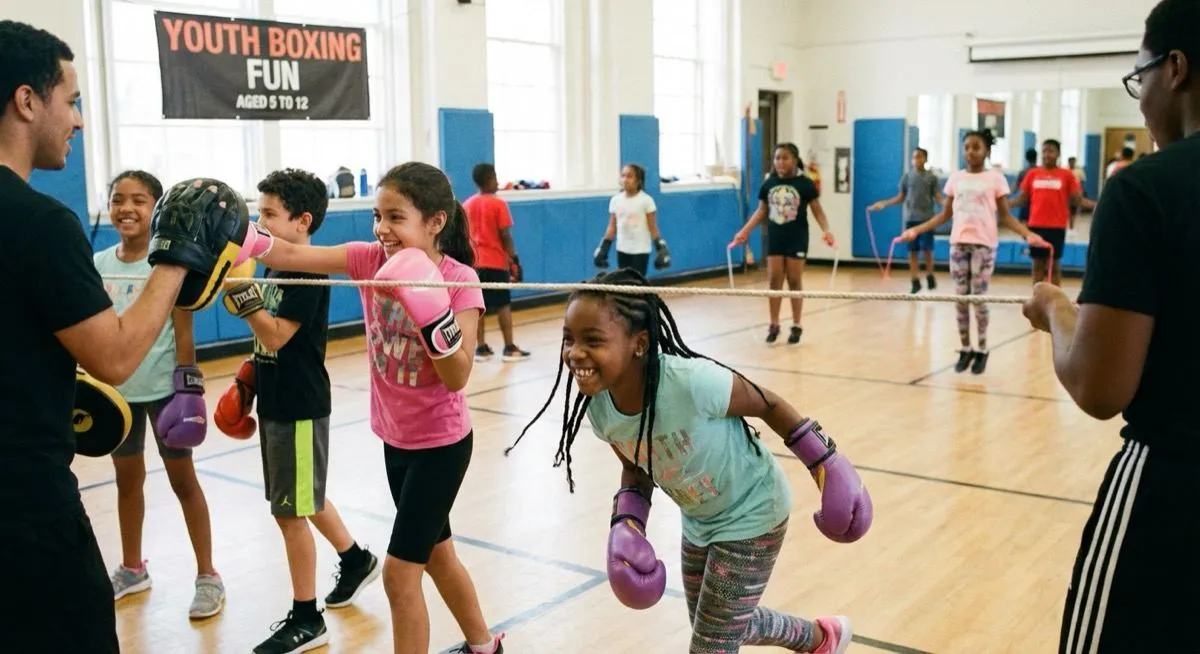
The H&G Route by Age
Here is the simple version for Honour and Glory.
Under 7: not a group junior boxing class yet. General movement, coordination and confidence-building can help them prepare.
Ages 7 to 16: start with Junior Recreational. Expect age-appropriate drills, movement, confidence, coordination and basic technique.
Ages 10-16: most children still start with Junior Recreational. If they want the competition pathway and the coaches agree they are ready, Junior Competitive becomes an option.
Ages 17+: adult classes become the right route, usually Adult Recreational unless the boxer is already competition-ready.
The important thing is not to rush the label. The right class is the one that matches the child in front of the coach.
The Best First Step
The best first step is not buying expensive kit or deciding whether your child will compete.
It is one session.
Let them try the gym, meet the coach, feel the structure, and see whether they want to come back. Most children give you a clear answer quickly.
For children aged 7-16 in Kidbrooke, Greenwich, Blackheath, Eltham and South East London, start with our Junior Recreational class, read the wider kids boxing hub, or book a free trial session at Honour and Glory Boxing Club.
Quick Parent FAQ
What age can my child start boxing at Honour and Glory?
Children can start group junior boxing at Honour and Glory from age 7. The normal first step is Junior Recreational, which covers ages 7-16.
Does my child have to spar in Junior Recreational?
No. Junior Recreational is not built around sparring. Children learn through movement, bags, pads, shadow boxing, technical games and controlled coaching.
Does my child have to compete?
No. Competition is optional. Children who want the competition pathway can be considered for Junior Competitive from age 10 if the coaches think they are ready.
What if my child is nervous before the first session?
That is normal. Treat the first session as a trial: meet the coach, join the warm-up, try the drills and see how they feel. They do not need to prove anything on day one.
Can parents stay and watch?
Parents and carers cannot stay to watch sessions. Please speak to the coach before the class if your child needs help settling in.
H&G Team
Writer at Honour & Glory Boxing Club, a community boxing gym in Kidbrooke, South East London.
KEEP READING
What Age Can Girls Start Boxing in the UK?
The age question for girls starting boxing in the UK has a clear answer, but there is more to understand about what boxing at each age actually involves and what the pathway looks like.
What a Good Junior Boxing Club Feels Like
Parents usually know when a room feels right for their child. Here is what a good junior boxing club should actually feel like in practice.
How to Talk to Your Child About Starting Boxing
The conversation you have with your child before they first try boxing matters. Here is how to frame it in a way that sets them up for the best possible first experience.
Was this page helpful?
It takes one tap, and it genuinely helps.
Choose your next step
Turn this article into the right action
Some readers are ready to book. Some need the class route first. Pick the route that matches what you actually want.