Boxing vs Football for Fitness: What the Data Actually Shows

Boxing and football are both serious physical endeavours. Elite players in both sports are among the best-conditioned athletes in the world. But they develop fitness in different ways, and if you are choosing one as your primary activity - or considering adding one to the other - the differences matter.
This is not a "which sport is better" argument. It is a practical breakdown of what each actually does to your body.
Calorie Expenditure
Boxing burns approximately 600 to 800 calories per hour in a typical training session - pad work, bag rounds, conditioning. Sparring can push beyond that. Research published in the European Journal of Sport Science confirms the high energy expenditure from the constant full-body engagement.
Football matches burn 500 to 800 calories per hour depending on intensity and position. A study noted in CBS News placed the average at 612 calories per hour for recreational football. Elite players covering 10 to 13 kilometres per match burn toward the upper end.
The honest verdict: At comparable intensities, boxing burns slightly more. The reason is that boxing rarely has true rest periods within a round - even defensive work requires active movement. Football has natural lulls (throw-ins, goal kicks, positioning) that reduce the sustained intensity.
Heart Rate
Football creates what exercise scientists call "natural HIIT", sustained moderate intensity with frequent explosive bursts to 90 per cent of maximum heart rate. A study in PMC found small-sided football games produced mean heart rates around 85 per cent of peak in adolescents.
Boxing in three-minute rounds pushes heart rates above 93 per cent of maximum in elite practitioners, according to research on PubMed. The structure - maximum effort, brief recovery, repeat - is one of the more effective cardiovascular training stimuli available.
The honest verdict: Both are high-intensity cardiovascular exercise. Boxing tends to produce higher peak heart rates within rounds; football sustains moderate-to-high intensity for longer continuous periods.
Muscle Groups
Football develops lower body power primarily - quads, hamstrings, glutes - through running, kicking, and changing direction. The upper body is relatively underdeveloped by football training alone.
Boxing develops the full kinetic chain. A punch is not an arm movement - it is a hip rotation, through the core, into the shoulder, arm and fist. This means regular boxing training develops the shoulder girdle, chest, triceps, obliques, and rotational core strength in ways football does not. Footwork develops comparable lower body agility to football, though not the same straight-line speed.
The honest verdict: Football players who take up boxing almost universally comment on upper body development they had not expected.
Coordination and Skill Development
Football develops spatial awareness within a large field context - reading movement, anticipating play, positioning.
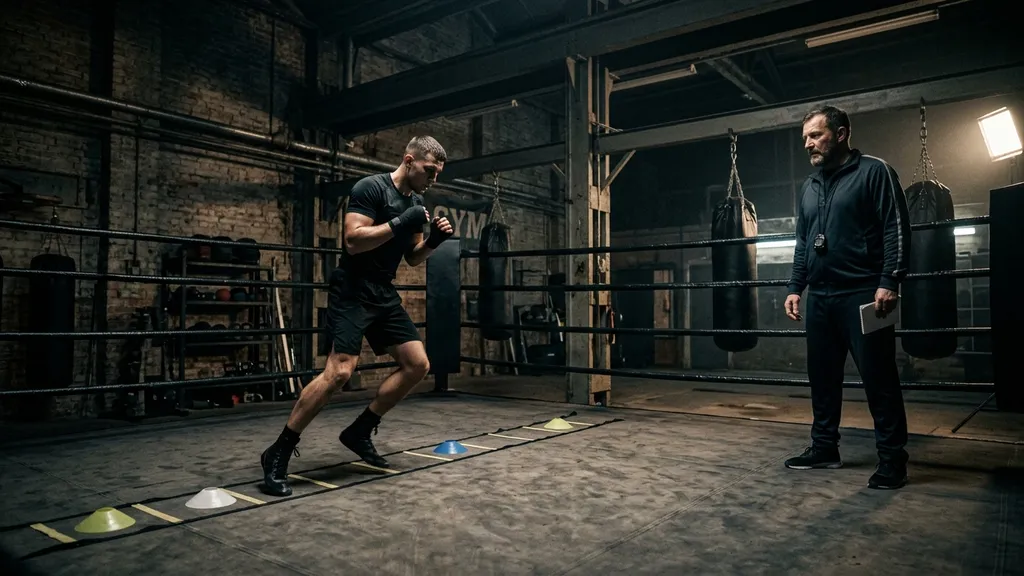
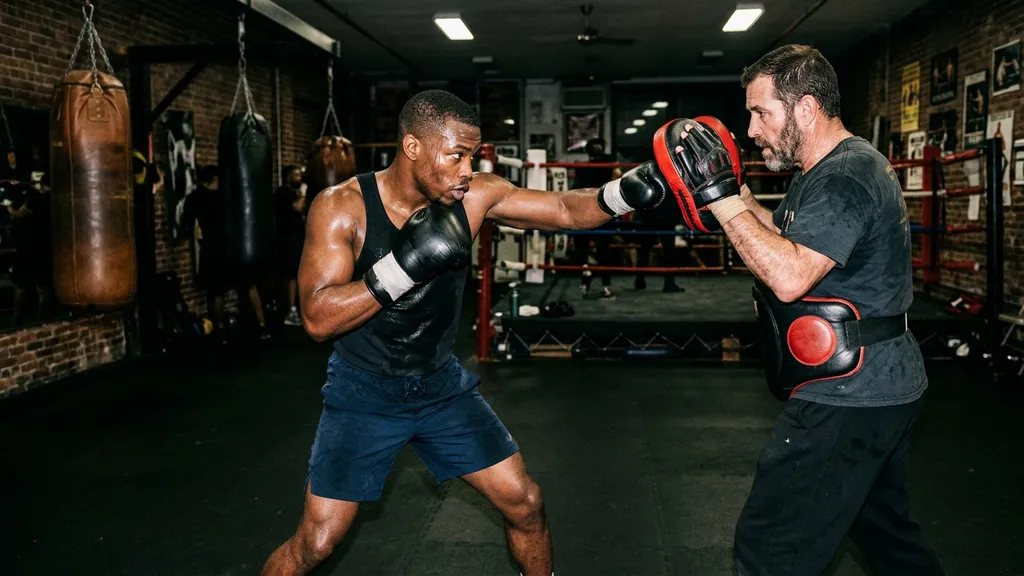
Boxing develops close-range, high-speed coordination. Pad work requires processing visual cues at close range and responding with precisely timed, sequenced movements. This is a different neural demand to football, and it is why many former footballers who try boxing find it genuinely challenging at first.
Both sports continue to develop skill throughout a lifetime of practice. Neither plateaus.
Fitness for Non-Athletes
The more practical question for most people reading this is not "which develops elite athletes better" but "which is a better fitness activity for someone who just wants to get fitter."
Football for recreational fitness requires either a team (which requires coordinating schedules), a specific venue (a pitch), or paying for organised sessions. The barriers to getting a football workout are real.
Boxing requires a gym and a coach. Once you have found a club, you can train five days a week on a drop-in basis. The session is always there - you do not need to find ten other people to come with you.
This is a practical consideration that is often overlooked in abstract fitness comparisons.
The Cross-Training Case
For footballers specifically: boxing is an excellent complement, not a replacement. The upper body development, close-range coordination, anaerobic conditioning, and reaction work are precisely what football does not develop.
We wrote a longer piece on boxing as football cross-training that covers the practical integration in more detail.
Getting Started
Our recreational adults sessions are in Kidbrooke, 15 minutes from most of Greenwich. Monday, Wednesday and Friday evenings, £10 per session, no contract.
H&G Team
Writer at Honour & Glory Boxing Club, a community boxing gym in Kidbrooke, South East London.
Was this page helpful?
Your feedback helps us improve this page
Got questions about what you just read?
ASK OUR AI ASSISTANT ✨MORE LIKE THIS



WANT TO JOIN US?
Book a free trial session and see what we're all about.
Book a Free Trial