Boxing for Footballers: Why It Works as Cross-Training
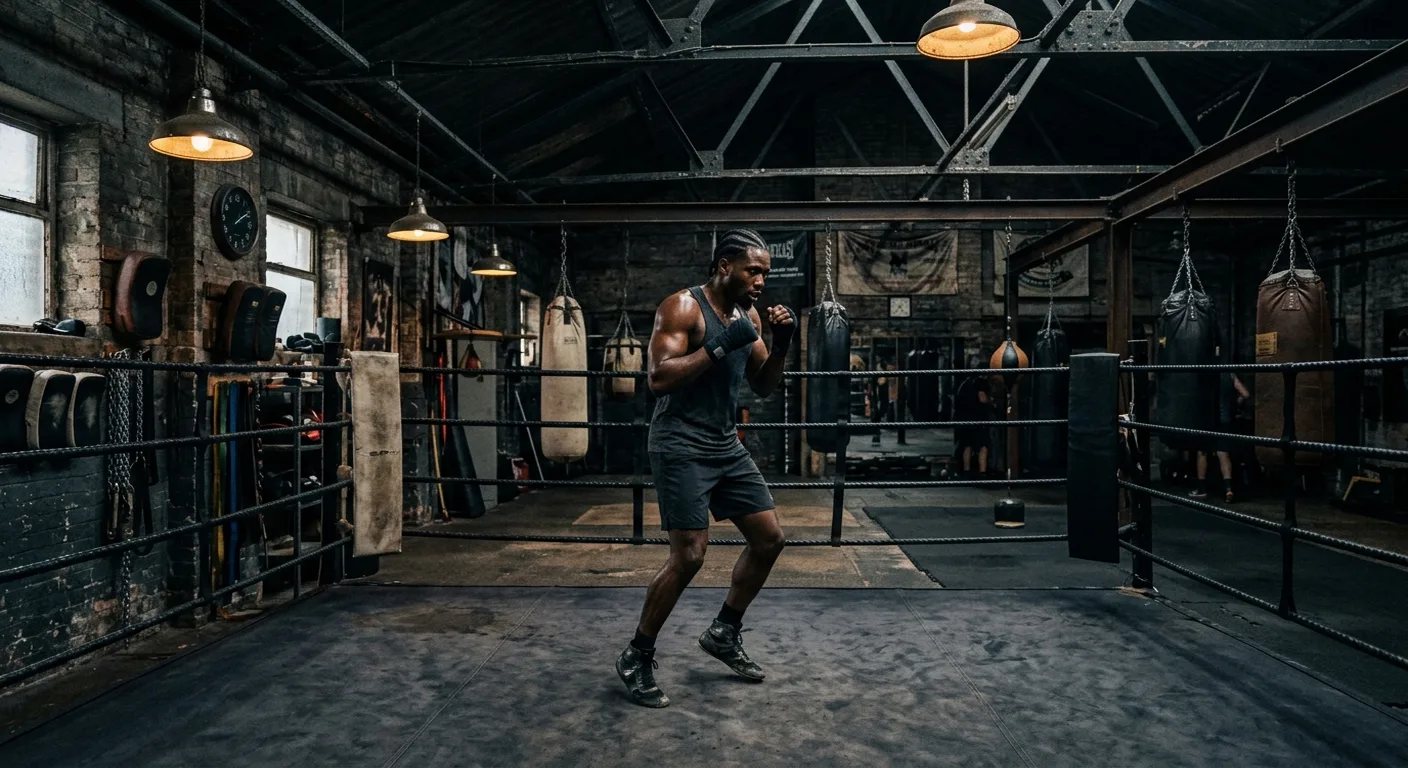
Boxing has a growing reputation as one of the most effective cross-training options for footballers. Not boxercise. Not a punch-bag circuit set to dance music. Actual boxing training - footwork, pad work, combinations, conditioning.
The reasons are not complicated. Football and boxing share more physiological demands than most people realise. And the benefits boxing adds are precisely the ones football struggles to develop on its own.
What Football Develops Well
Football builds extraordinary aerobic capacity. Elite players cover 10 to 13 kilometres per match, with two to three kilometres at high intensity. A 2024 study in the Journal of Men's Health confirmed that even a six-week endurance programme measurably improves VO2max and cardiac markers in competitive football players.
Football also develops lateral agility, spatial awareness, and the ability to make rapid decisions under pressure. These are real, transferable fitness qualities.
What football does not develop particularly well: upper body strength, rotational power, hand-eye coordination at close range, and the ability to work at near-maximum heart rate in short, explosive bursts.
What Boxing Adds
Boxing training operates at the other end of the intensity spectrum from most football conditioning. A typical boxing session involves three-minute rounds with one-minute rest - high-intensity intervals that drive heart rate above 93 per cent of maximum according to research published on PubMed.
That kind of anaerobic conditioning is hard to replicate in football training, where sustained movement across a pitch naturally keeps athletes in the aerobic zone.
Beyond the cardiovascular work, boxing develops:
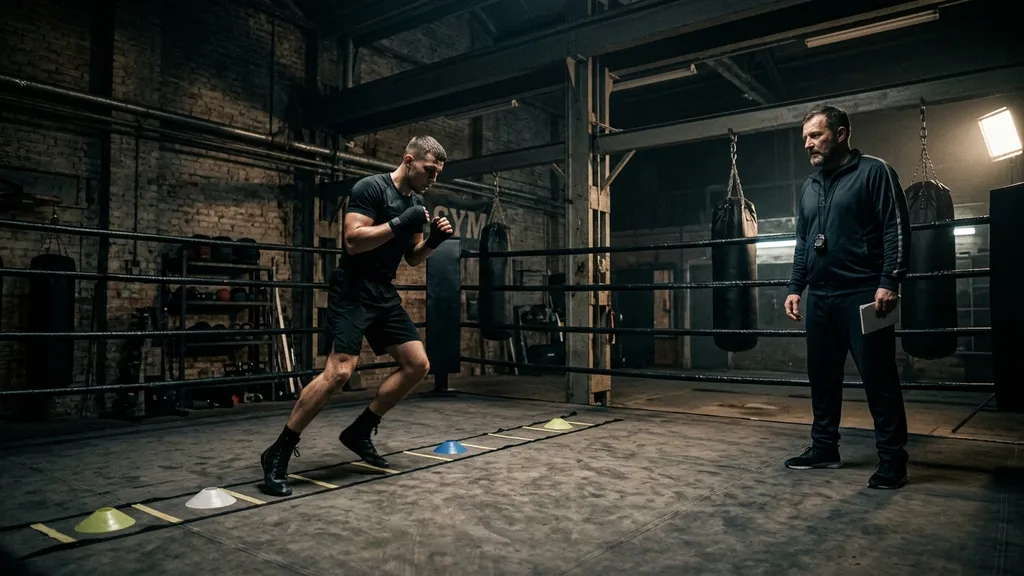
Footwork and balance. Boxing footwork - the constant repositioning, the weight shifts, the angled movement - transfers directly to better balance under challenge on the pitch. Former FourFourTwo analysis of the crossover noted the footwork similarities explicitly.
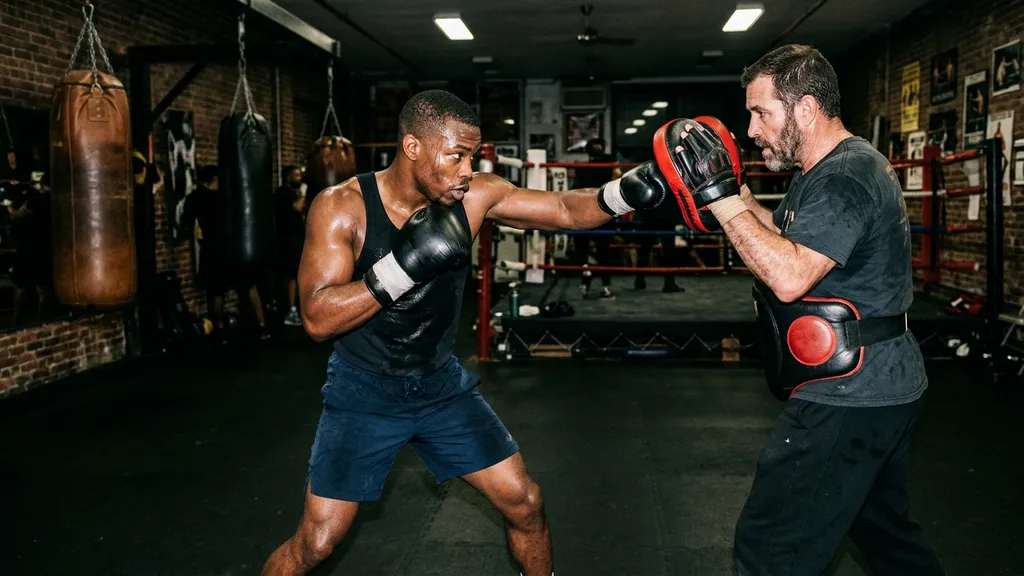
Reaction time. Pad work in particular forces rapid processing of visual cues and immediate physical response. This is different from football reaction time (which is mostly positional), it is a close-distance, full-speed test of hand-eye coordination that football simply does not train.
Upper body power. Footballers rarely do real upper body work. Boxing develops the chest, shoulders, core rotation, and lats through the mechanics of the punch itself - not through isolated gym exercises.
Mental toughness under fatigue. There is something specific about boxing training that forces you to maintain technical precision when you are physically depleted. Footballers describe it as similar to the concentration demand in the final twenty minutes of a match, but compressed into three-minute bursts.
The Research on Boxing as Cross-Training
A 2024 review in Frontiers in Physiology found that strength training interventions in boxers significantly improved force production, rate of force development, and power output - qualities directly relevant to sprint acceleration and change of direction in football.
The benefits are not one-way. Boxing coaches have long noted that athletes with a football background adapt quickly to boxing footwork. The lateral movement patterns share enough overlap that former footballers pick up the defensive positioning faster than most beginners.
Practical Application
The question for most footballers is how to integrate boxing without it conflicting with match preparation or recovery.
The standard approach:
- One session per week in season. Tuesday or Wednesday, away from matchday. Focus on pad work and technique rather than heavy bag circuits. The aim is coordination and sharpness, not additional fatigue loading.
- Two to three sessions per week in pre-season. This is where the cardiovascular gains compound. The anaerobic conditioning from regular boxing rounds builds a fitness base that carries through the season.
- Technique-first in the first month. Boxing is a skill sport. Footballers who come in and immediately start punching as hard as they can miss the point. The footwork and combination work require patience before the conditioning benefits fully emerge.
What Charlton Athletic Players and Local Footballers Are Doing
The Valley is roughly two miles from Honour & Glory in Kidbrooke. We see footballers from the local grassroots scene regularly - coaches who play Sunday league, parents who played into their thirties and still want to stay sharp, young players looking for an edge in the off-season.
The common feedback: the first month is humbling. The second month, they start to feel different on the pitch - lighter on their feet, faster to react in tight spaces, stronger in the upper body when holding off opponents.
Getting Started
Our recreational adults sessions run Monday, Wednesday and Friday evenings, 7:30 to 9pm. No experience required. First session is free.
If you are a footballer and want to discuss what a realistic integration looks like for your training week, message us on WhatsApp. We can advise on session frequency and what to focus on depending on where you are in the season.
H&G Team
Writer at Honour & Glory Boxing Club, a community boxing gym in Kidbrooke, South East London.
KEEP READING

Boxing for People Who Have Tried Every Other Fitness Class
The gym dropout rate is high because most fitness options do not sustain interest or motivation beyond the initial period. Boxing survives where other options do not. Here is why.

Muscle Memory in Boxing: The Science Behind It
Muscle memory is not magic and it is not really in the muscles. Here is what boxing training changes in the brain, nerves and movement system.

Is Boxing Good for Weight Loss?
Boxing burns serious calories, but is it actually effective for weight loss? We look at the evidence, explain why it works, and share what we have seen with our own members.
Was this page helpful?
It takes one tap, and it genuinely helps.
Choose your next step
Turn this article into the right action
Some readers are ready to book. Some need the class route first. Pick the route that matches what you actually want.