Why Athletes in Other Sports Are Adding Boxing to Their Training
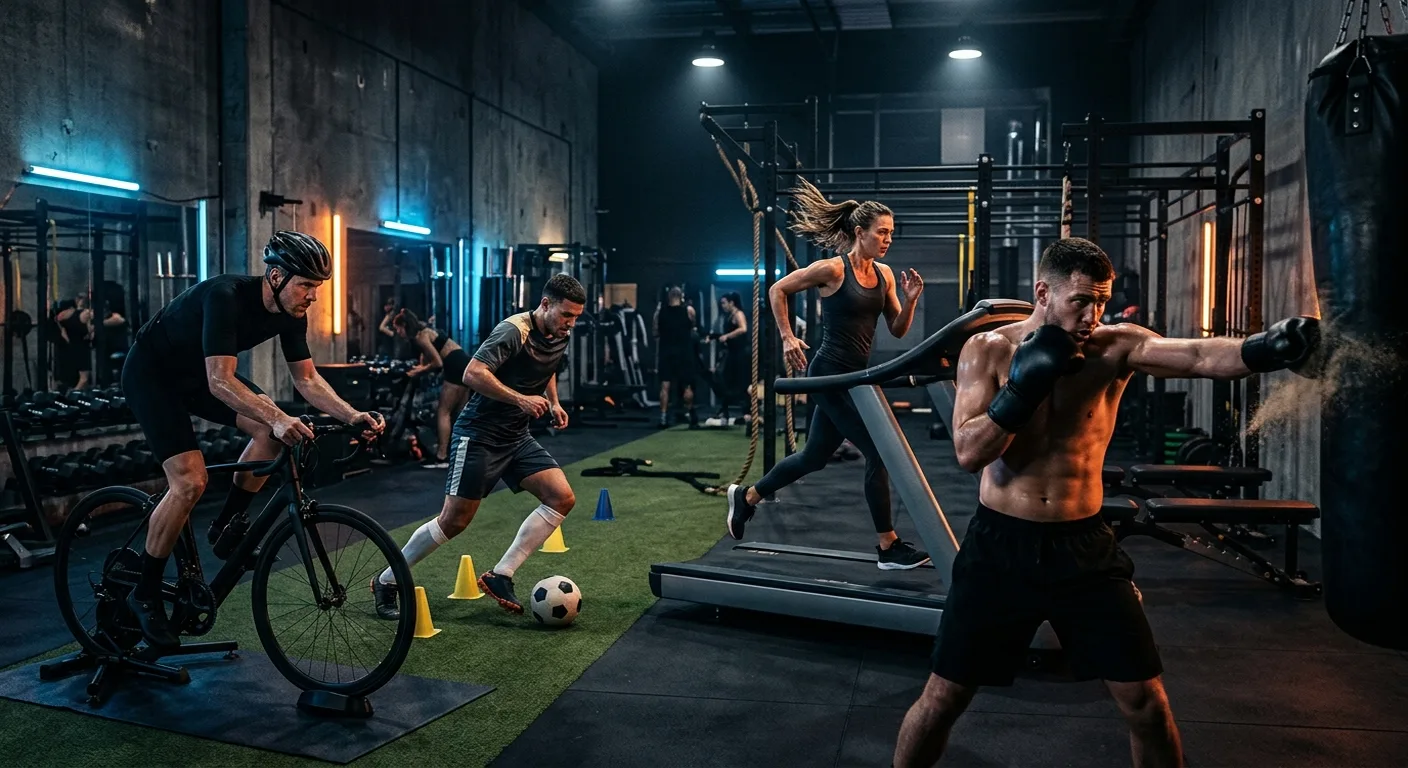
Boxing's reputation as a standalone sport - an intense, disciplined, technically demanding martial art - is well-established. What is less discussed is how effectively boxing transfers to other sports as cross-training.
The athletes finding their way into boxing gyms are not just people who want to get fit. They are footballers in the off-season, rugby players looking for upper body conditioning that does not add bulk, cyclists who want to develop upper body symmetry, and tennis players working on reaction time.
This is what the research actually shows, and why this pattern is growing.
What Boxing Develops That Most Sports Cannot
Reaction time and coordination
A 2020 study referenced in a 2024 analysis on applied sport science found that combat sports athletes - including boxers - demonstrated shorter reaction times, superior tactile sensitivity, and fewer errors in motor coordination tests compared to basketball and football players.
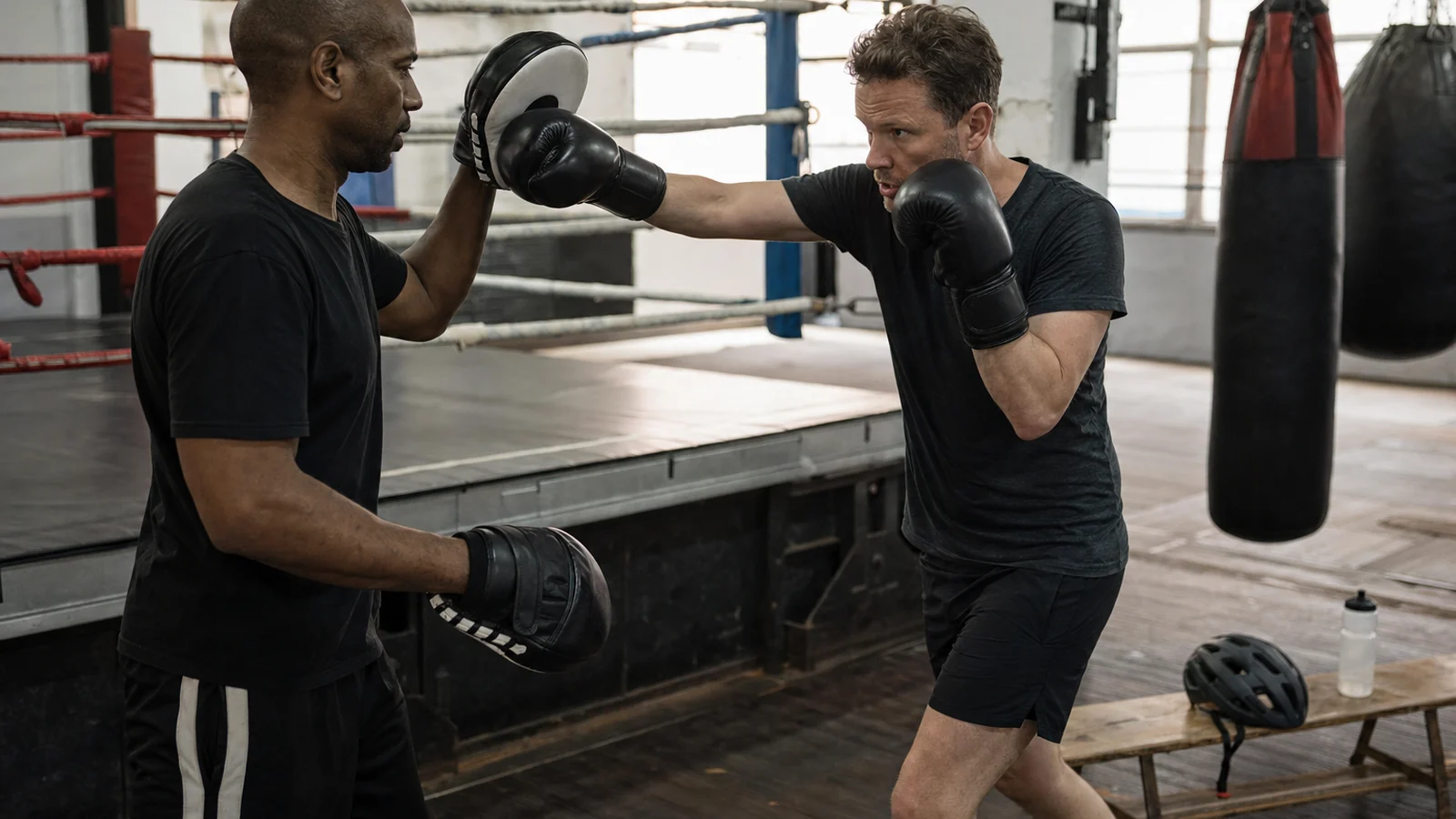
The mechanism is not complicated. Boxing pad work requires processing visual information at close range, under physical fatigue, and responding with precise sequenced movements within fractions of a second. This is a neural demand that no other form of training replicates at the same intensity.
For footballers, this translates to sharper reactions in tight spaces. For tennis players, it improves the speed at which they read and respond to incoming balls. For rugby players, it changes how they read and react to close-range opposition.
Core strength and rotational power
A punch is not an arm movement. It originates in leg drive, transmits through hip rotation, stabilises through the obliques, and expresses through the shoulder and arm. This means consistent boxing training develops the rotational core strength that most gym programmes isolate poorly.
Golfers, cricketers, and tennis players in particular find boxing develops rotational power in a way that isolated gym exercises do not. The Frontiers in Physiology 2024 review confirmed significant improvements in explosive power output from boxing training, with benefits transferring to both upper and lower body force production.
Cardiovascular conditioning without joint loading
Boxing training - particularly the bag and pad work at the centre of most recreational sessions - delivers high-intensity cardiovascular work with relatively low impact on knees and ankles compared to running. For athletes managing the cumulative load from their primary sport, this is significant.
Cyclists and runners who add boxing typically report improved cardiovascular efficiency without the additional strain of more running miles. The anaerobic conditioning from three-minute rounds builds a fitness quality that steady-state cardio does not develop.
Balance and stability
A 2024 review noted significant improvements in balance from regular boxing exercises. The footwork component - constant weight shifts, lateral movement, pivoting - challenges proprioception (the body's sense of its own position) in ways that most gym-based training ignores. Athletes who compete on uneven surfaces or in contact situations find this transfers directly.
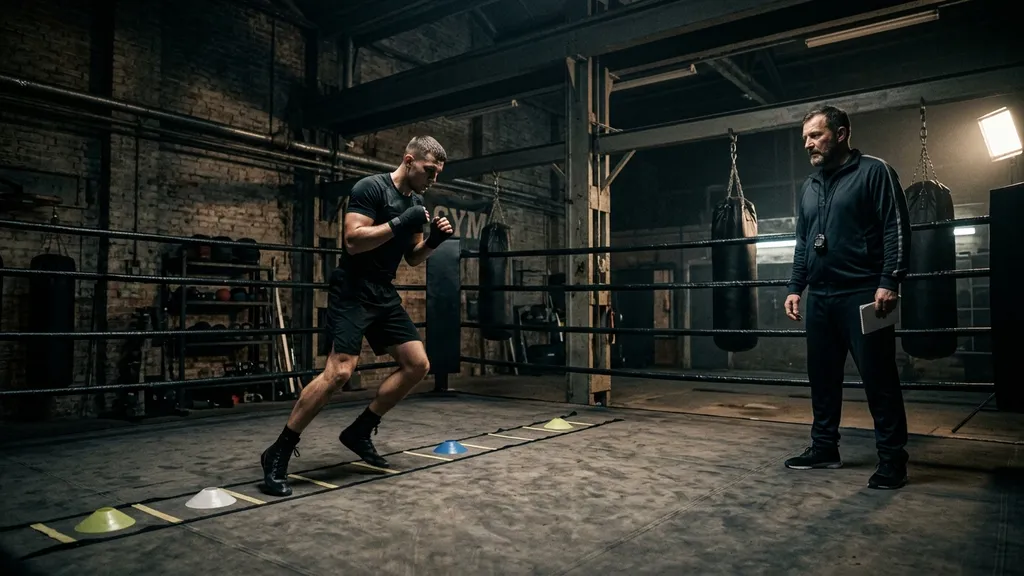
What Different Sports Get From Boxing
Footballers: Upper body development, close-range reaction time, anaerobic conditioning. We cover this in more detail in our piece specifically on boxing for footballers.
Cyclists: Upper body symmetry, core strength, and cardiovascular variation. The intense interval nature of boxing rounds offers a different metabolic stimulus to long aerobic rides. We cover this properly in our boxing for cyclists cross-training guide.
Runners: Core stability, upper body strength, and a high-intensity alternative that reduces mileage load while maintaining cardiovascular fitness. Particularly useful during injury prevention phases.
Tennis and racket sports players: Hand-eye coordination, rotational power, reaction time. Boxing pad work is arguably the most specific non-racket training for these qualities.
Rugby and contact sports players: Upper body conditioning, balance under physical challenge, and the mental discipline of staying composed under pressure. Rugby coaches at various levels have incorporated boxing for pre-season conditioning for years.
How to Integrate Boxing Without It Conflicting
The practical concern for most athletes is time and recovery. Boxing is a skilled activity that takes time to learn, and it is physically demanding - misjudging the load can compromise primary sport training.
The general framework coaches use:
- In-season: One session per week, technique-focused. The aim is coordination and sharpness, not physical loading.
- Pre-season / off-season: Two to three sessions per week. This is where the cardiovascular and strength gains compound.
- First four weeks: Focus on technique before intensity. The footwork and combination work requires patience.
The quality of the coaching environment matters here. In a well-run boxing session, the coach can adjust the intensity and focus based on what the athlete needs. This is different from hitting a bag alone, which provides less return for the time invested.

Getting Started in SE London
Honour & Glory's adult recreational sessions are Monday, Wednesday and Friday evenings in Kidbrooke - around 4 minutes by car from central Greenwich, around 10 minutes from Charlton, with public transport routes from Lewisham.
£10 per session, no contract. If you want to discuss how to integrate boxing alongside your current training schedule, message us on WhatsApp and we will give you an honest answer about what makes sense.
H&G Team
Writer at Honour & Glory Boxing Club, a community boxing gym in Kidbrooke, South East London.
KEEP READING
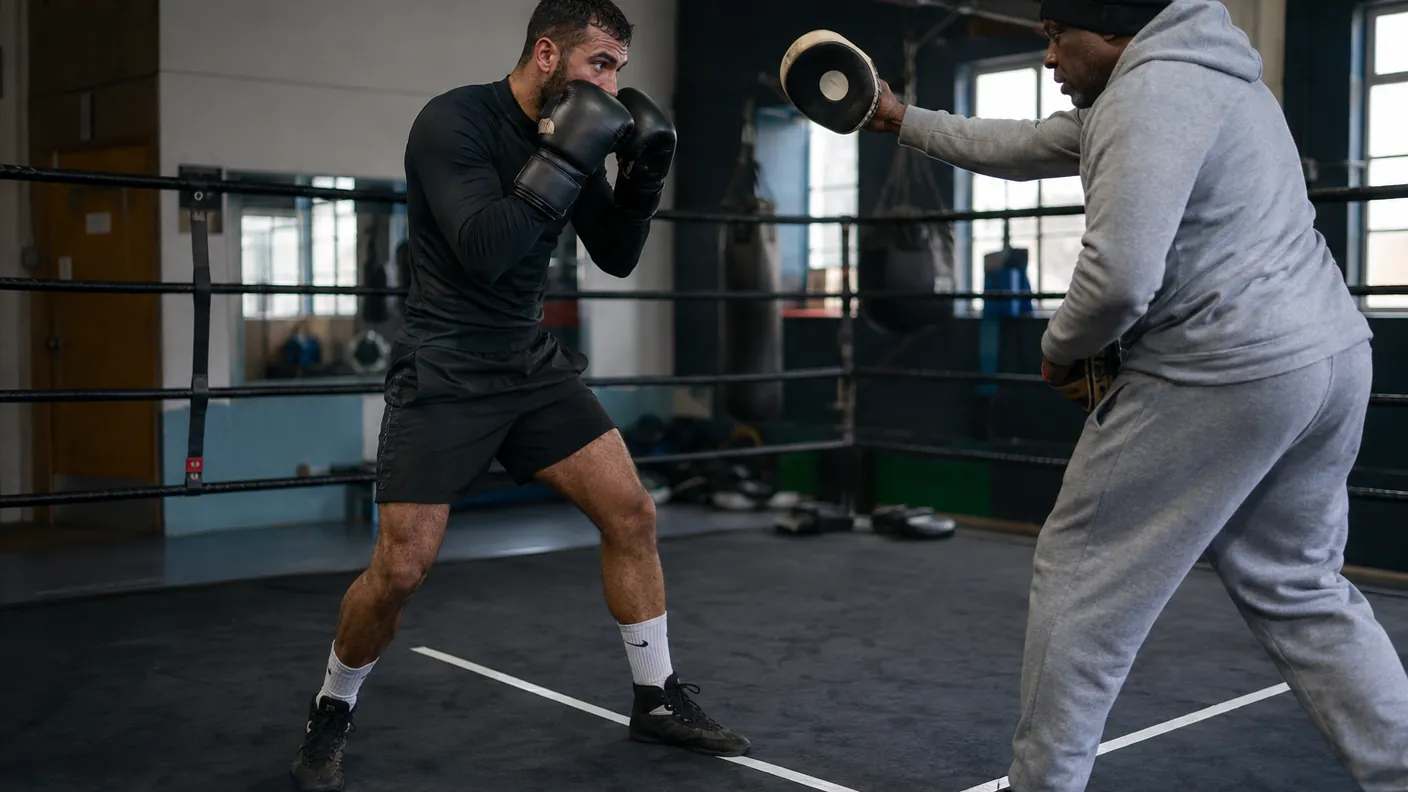
Step Across and Pivot After the Boxing Cross
Use a small lead-foot step across and pivot after the cross to change the line without crossing your feet or leaving your guard behind.
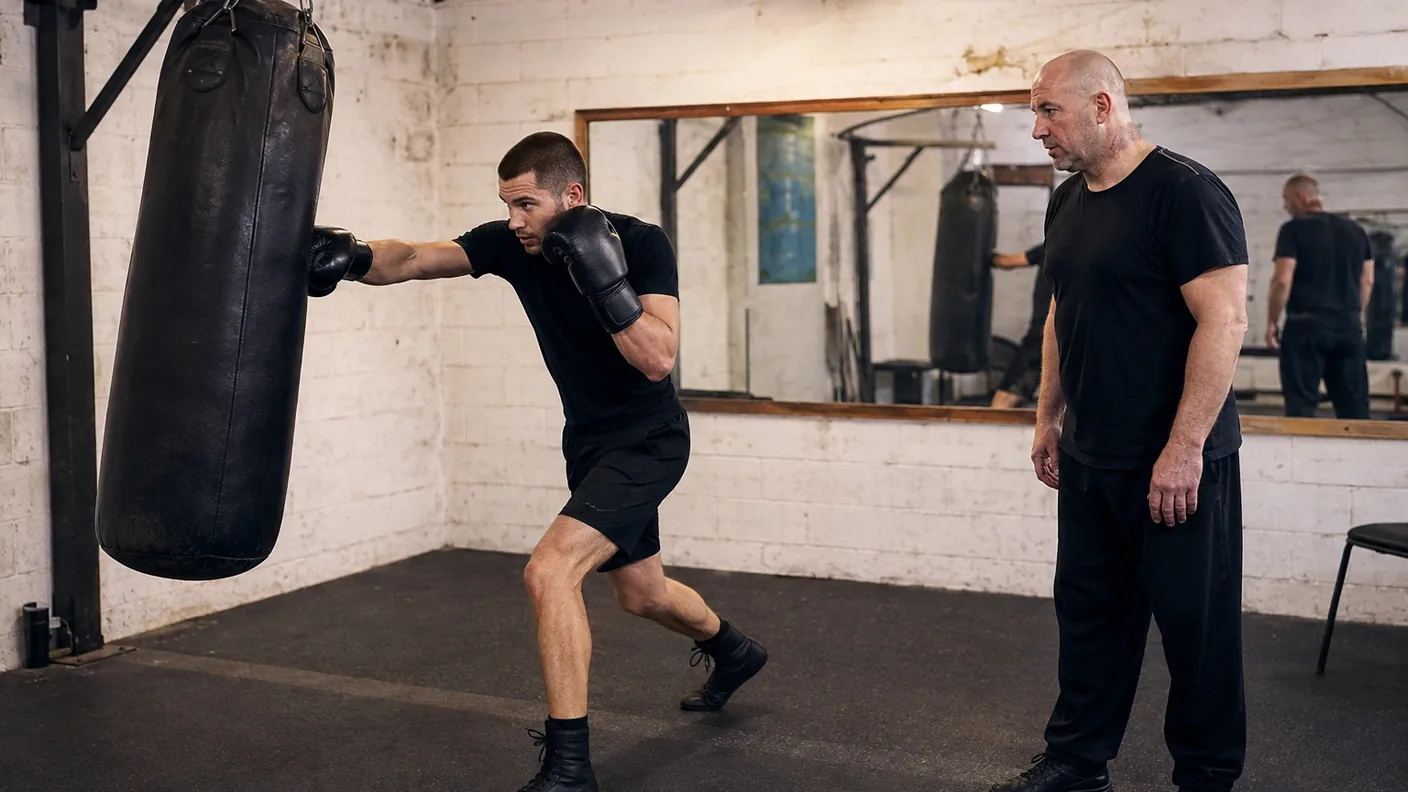
Jab Step-Across Cross: A Boxing Angle Drill
Use a compact jab step-across to open a rear-hand angle without crossing your feet, losing your guard or reaching for the cross.
Boxing for Cyclists: Cross-Training That Fixes Gaps
Cycling builds serious fitness. Boxing adds the core, upper-body work, footwork and intervals most riders miss.
Was this page helpful?
It takes one tap, and it genuinely helps.
Choose your next step
Turn this article into the right action
Some readers are ready to book. Some need the class route first. Pick the route that matches what you actually want.