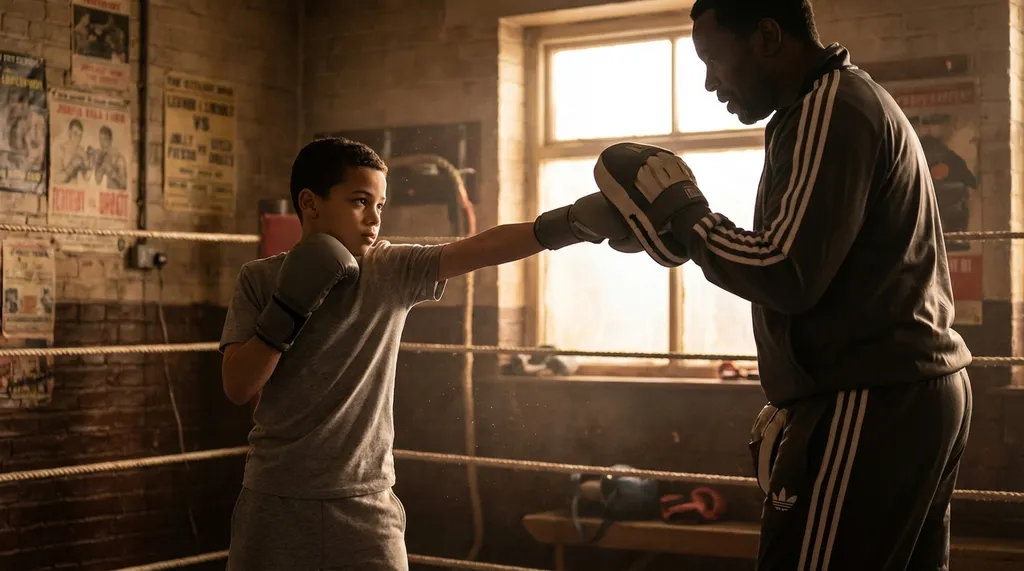
Parents sometimes ask whether boxing will make a child more aggressive. In a properly coached gym, the aim is the opposite: control.
A junior boxing class gives children rules, structure and physical effort. They learn to listen, wait, move safely, stop when told, and control their effort around other people.
That can be valuable practice. It should not be oversold. Boxing is not therapy and it will not solve every behaviour issue. But a calm, well-run session can help children practise habits that matter.
Controlled effort
Boxing is not just hitting hard. Children learn stance, guard, balance, distance and timing. They learn that throwing wild punches is not good boxing.
A coach can correct the behaviour immediately: slow down, hands up, breathe, listen, try again.
That is the useful part. The child gets repeated practice in being energetic without being reckless.
Clear boundaries
Good junior coaching uses clear rules:
- listen when the coach is speaking
- respect your partner
- stop when told
- no messing around with gloves or bags
- train hard without showing off
Children know where they stand. For many young people, that clarity is helpful.
Confidence without ego
Boxing can build confidence because the child learns a real skill. The confidence comes from practice, not from pretending to be tough.
At Honour and Glory, Junior Recreational is the normal first step. Children can learn the basics without competition pressure. If they later want to compete, that is a separate coach-led pathway.
H&G Team
Writer at Honour & Glory Boxing Club, a community boxing gym in Kidbrooke, South East London.
Was this page helpful?
Your feedback helps us improve this page
Got questions about what you just read?
ASK OUR AI ASSISTANT ✨MORE LIKE THIS

WANT TO JOIN US?
Book a free trial session and see what we're all about.
Book a Free Trial