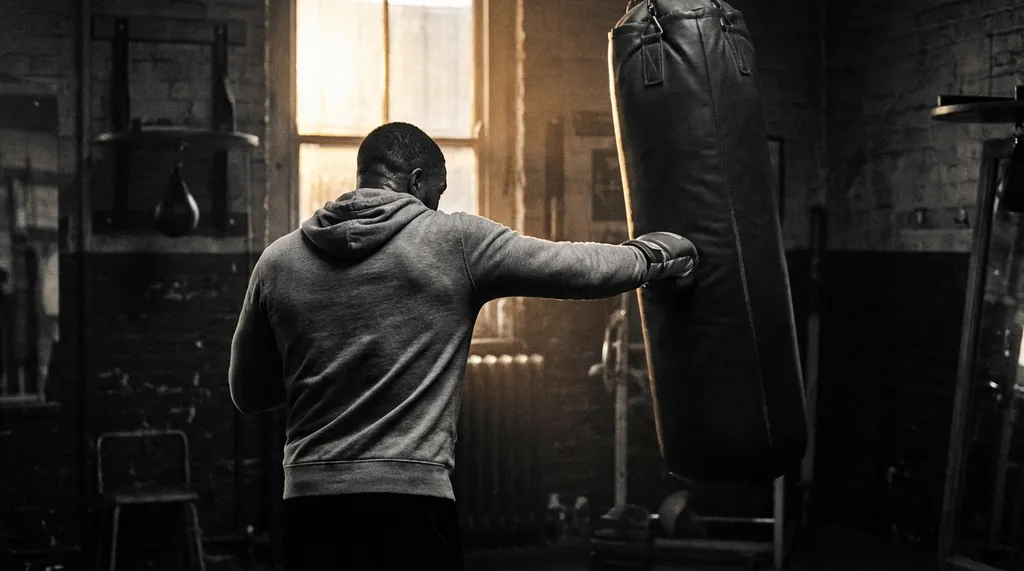
Boxing does train the upper body, but not in the same way as a bodybuilding programme.
You use your shoulders, upper back, lats, traps and rear delts every time you punch, defend, hold your guard, rotate and recover your hands. The work is repeated, fast and technical.
That does not mean everyone gets the same visual result. Body changes depend on how often you train, how hard you work, what else you do, your food, sleep and genetics.
What muscles boxing uses
Boxing uses the body as a chain.
The legs drive the movement. The hips and trunk rotate. The shoulder delivers the punch. The upper back helps control the arm and bring the hand back to guard.
Bag rounds and pad work can make the shoulders and upper back work hard, especially for beginners. Holding a guard also uses the traps and rear delts more than people expect.
What boxing will not do by itself
Boxing is not a replacement for progressive strength training if your goal is maximum muscle growth.
It can help you build conditioning, coordination and muscular endurance. It may support a leaner, more athletic look if you train consistently and eat well. But it should not be sold as a guaranteed physique transformation.
Best approach
If you want boxing plus strength, combine regular classes with simple strength work:
- rows or pull-ups for upper back
- presses for shoulders and chest
- squats or lunges for legs
- core work for rotation and control
If you are starting from zero, the first step is just learning to box safely and consistently.
H&G Team
Writer at Honour & Glory Boxing Club, a community boxing gym in Kidbrooke, South East London.
Was this page helpful?
Your feedback helps us improve this page
Got questions about what you just read?
ASK OUR AI ASSISTANT ✨MORE LIKE THIS


WANT TO JOIN US?
Book a free trial session and see what we're all about.
Book a Free Trial